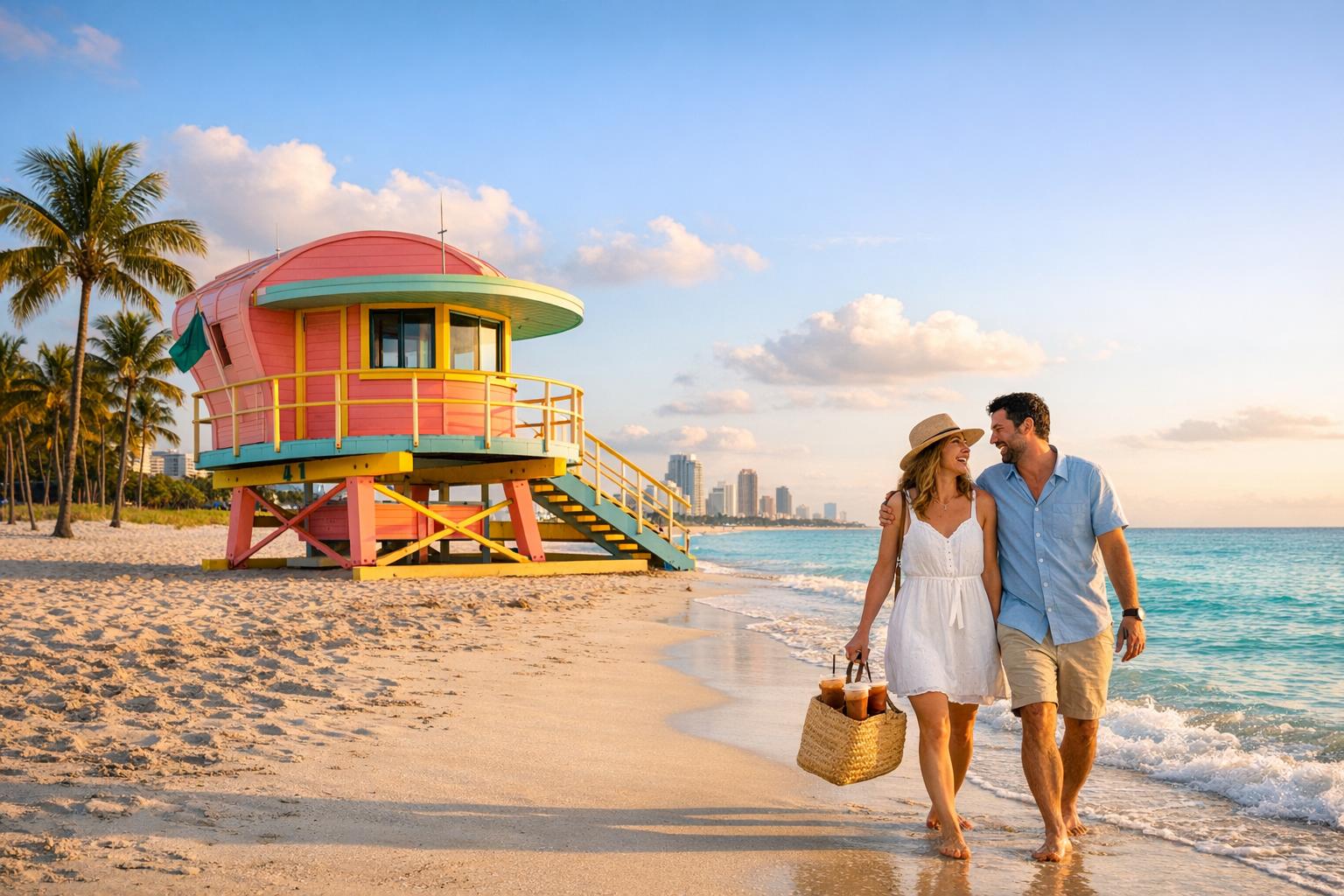
For the lowest-cost Hawaii staycation, skip the overnight stay: Ko Olina has free public beach access and parking. Want more time away? Choose a base on your home island before adding airfare and a rental car.
- Oʻahu’s North Shore: Beach scenery, food trucks, and overnight options from camping to resorts.
- Maui’s Upcountry: Cooler air and quiet inland stays, with driving needed for beach outings.
- Kauaʻi’s less-busy coast: A slower pace, with resident offers listed at 20%–25% off, subject to stay requirements and other terms.
- Nearby beach outings: A picnic and beach day without lodging costs.
The key? Compare the <u>total trip cost</u>, not just the room rate. Check taxes, fees, parking, accepted Hawaiʻi ID, and cancellation rules before booking. Then check weather, surf, and access before heading out - a resident discount doesn’t guarantee the cheapest trip.
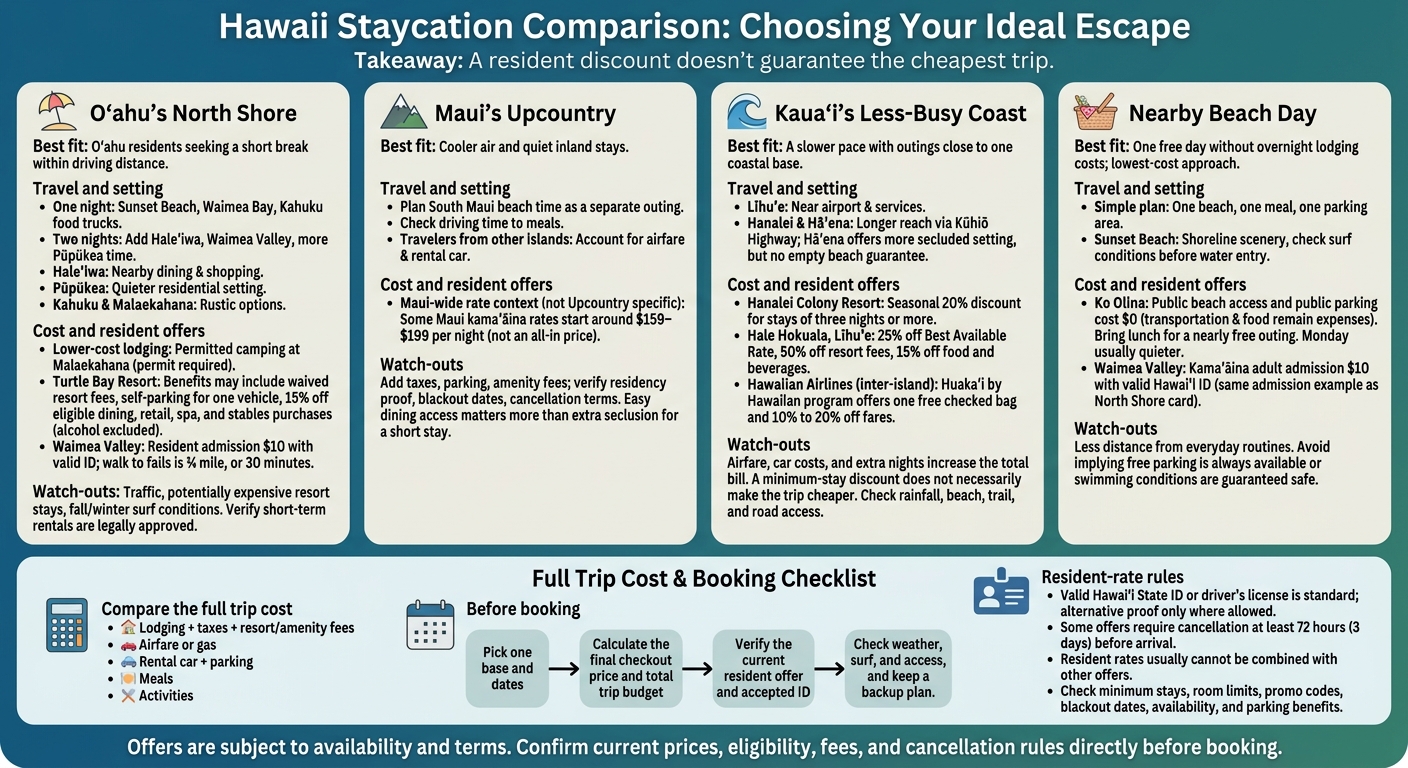
Hawaii Staycation Options: Compare Pace, Travel and Cost
SECRET Kamaʻāina Deals Revealed! Save BIG on Hotels, Tours & More
sbb-itb-863a0bb
Oʻahu’s North Shore
For Oʻahu residents, the North Shore is a good fit for a short, low-key break within driving distance.
Travel Logistics
One night gives you time for Sunset Beach, Waimea Bay, and Kahuku’s food trucks without a late drive back to Honolulu. Stay two nights to add Haleʻiwa, Waimea Valley, and more time in Pūpūkea.
Quiet and Setting
Choose your base and length of stay to match your pace. Haleʻiwa puts dining and shopping close together. Pūpūkea offers a quieter, more residential setting near surf beaches, while Kahuku and Malaekahana are the most rustic options. In fall and winter, plan beach visits around watching the waves rather than swimming.
Total Cost and Resident Savings
At The Ritz-Carlton Oʻahu, Turtle Bay, kamaʻāina benefits may include waived resort fees, self-parking for one vehicle, and 15% off eligible dining, retail, spa, and stables purchases. Alcohol is excluded.
For a lower-cost overnight stay, check permitted camping at Malaekahana and get a permit in advance. If booking a short-term rental, verify that it’s legally approved - not just listed.
Nearby Food and Activities
Once lodging is settled, keep the day simple: a local meal and one main activity. Pick up poke at Foodland Pūpūkea or stop at Kahuku’s food trucks.
With two nights, set aside an unhurried morning for Waimea Valley. The walk to the falls is about ¾ mile, or 30 minutes. Resident admission is $10 with valid ID. Check whether waterfall swimming is permitted before heading out.
Maui’s Upcountry
Travel Logistics
Make Upcountry your base for cooler air and fewer beach crowds. Plan South Maui beach time as a separate outing.
Quiet and Setting
Upcountry’s cooler microclimate provides a quiet inland contrast to coastal Maui. Check the property’s location and driving time to meals. For a short stay, easy dining access matters more than extra seclusion.
Total Cost and Resident Savings
Some Maui kamaʻāina rates start at around $159–$199 per night. Ask for the total, including taxes, parking, and amenity fees. Then book through the property’s official offers page and select its listed kamaʻāina rate.
Confirm accepted proof of residency, blackout dates, and cancellation terms. A Hawaiʻi State ID or driver’s license is standard. Some properties also accept a utility bill or voter registration paired with photo ID.
Nearby Food and Activities
Pair Upcountry stops with nearby dining and check opening hours before heading out. Keep beach time separate to avoid backtracking. Check kamaʻāina rules before booking any lodging or activity.
Kauaʻi’s Less-Busy Coastal Areas
Travel Logistics
For a slower-paced Kauaʻi trip, choose one coast rather than trying to cover the whole island.
Līhuʻe suits a short stay thanks to its proximity to Līhuʻe Airport. Hanalei and Hāʻena take longer to reach via Kūhiō Highway, but put you closer to the quieter North Shore. For inter-island travel, Hawaiian Airlines’ Huaka‘i by Hawaiian program offers one free checked bag and 10% to 20% off fares.
Quiet and Setting
Hāʻena has a more secluded setting, while Līhuʻe puts services within easier reach. Neither promises empty beaches. Keep outings close to your base and skip the whole-island itinerary.
Check rainfall forecasts and current beach, trail, and road access before heading out. Leave room to change outdoor plans if conditions shift.
Total Cost and Resident Savings
Hanalei Colony Resort lists a seasonal 20% discount for stays of three nights or more. Hale Hokuala in Līhuʻe lists 25% off the Best Available Rate, 50% off resort fees, and 15% off food and beverages.
Compare the final cost, not just the discount: a longer minimum stay can cost more than a shorter trip. Check current offers through HiKamaʻāina, then confirm availability, parking benefits, and cancellation rules directly with the property.
Nearby Food and Activities
Once you’ve priced the stay, book one meal and one activity near your base. If you’re staying in Hāʻena, check Na Pali Coffee House hours, reserve Hanalei Day Spa in advance, and keep surf lessons weather-dependent.
In Līhuʻe, on-site dining can make a brief stay easier. Confirm which outlets qualify for the resident dining discount, and plan meals around verified hours to avoid extra nighttime driving.
Nearby Beach Outings
Travel Logistics
For a low-cost day trip instead of an overnight stay, keep it simple: one beach, one meal, and one parking area.
Heading to the North Shore? Leave at sunrise for Sunset Beach and park in a nearby public lot. Ko Olina is another easy option, with free public access and parking near the marina. Monday is usually quieter.
Quiet and Setting
Pick Sunset Beach for scenery and Ko Olina for swimming.
Sunset Beach is best for shoreline views, not routine swimming. Check surf conditions before entering the water. Ko Olina is better suited to a picnic and swim day.
Total Cost and Resident Savings
Bring lunch to keep a Ko Olina outing nearly free. Beach access and public parking cost $0, leaving transportation and food as the main expenses.
For a paid North Shore add-on, Waimea Valley lists kamaʻāina adult admission at $10 with a valid Hawaiʻi ID.
Nearby Food and Activities
Stop at Foodland Pūpūkea for poke to take on your picnic.
Kamaʻāina Deals: Eligibility and Booking Rules
After choosing a North Shore, Upcountry, or Kauaʻi option, check the resident-rate terms. These are live offers, not guaranteed savings. Confirm the details on the property’s website or by phone before booking.
| What to verify | What to check |
|---|---|
| Residency proof | A valid Hawaiʻi state ID or driver’s license may be required at booking or check-in. Some properties accept a utility bill, but only if their terms say so. |
| Cancellation window | Some offers require cancellation at least 72 hours (3 days) before arrival. |
| Discount stacking | Resident rates usually can’t be combined with other offers. |
| Booking rules | Check minimum stays, room limits, promo codes, blackout dates, and availability. |
Compare the full cost for your dates, including taxes, resort or amenity fees, and parking. Save the current offer terms with your booking confirmation.
Pros and Cons: Choose by Time and Budget
Compare the options based on your home island, available nights, and total budget, along with how much driving or flying you’re willing to do.
| Option | Pros | Cons |
|---|---|---|
| Oʻahu’s North Shore | Oʻahu residents can drive there; camping cuts lodging costs. | Traffic eats into downtime; resort stays can be expensive. |
| Maui’s Upcountry | Local inns may cost less than beachfront lodging. | Outings require driving; travelers from other islands also pay for airfare and a car. |
| Kauaʻi’s quieter coast | Staying several nights spreads out the travel effort. | Inter-island airfare, car costs, and extra nights add to the total bill. |
| Nearby beach day | Fits into one free day, with no lodging or airfare costs. | Offers less distance from everyday routines. |
Choose the base, not just the island. Staying near meals and activities means less daily driving. A quieter setting, though, often comes with fewer nearby options.
A longer Kauaʻi stay spreads the travel effort over more nights, but it doesn’t automatically lower the total bill. A day trip keeps costs down by skipping an overnight stay.
Once you’ve chosen a base, check the resident rate and booking rules.
Conclusion: Choose Your Pace and Check the Price
Compare pace, driving time, and total cost, then choose a base that fits your schedule and budget. For the lowest cost, choose a nearby beach day.
Before booking, use this booking checklist:
- Pick one base and set your travel dates.
- Add up the full cost: lodging, taxes, fees, airfare or gas, rental car, parking, meals, and activities. Check the final checkout price - not the advertised rate - and book only when the total fits your budget.
- Verify the current kamaʻāina offer on the property’s website or by phone. Confirm booking restrictions and accepted ID.
- Check weather, surf, and access before you go. Have a backup plan: switch dates or choose a nearby beach outing.
FAQs
Can my nonresident guests share my kamaʻāina rate?
No. Kamaʻāina discounts are only for Hawaiʻi residents, so nonresident guests don’t qualify. Businesses require a valid Hawaiʻi driver’s license or state ID at booking or check-in to confirm residency.
How far ahead should I book a Hawaii staycation?
Book as early as possible, but check each kamaʻāina deal’s booking window and blackout dates. Certain Hanalei Colony Resort add-ons require booking at least 3 days ahead, while Maui Beach Hotel may require 72 hours’ notice for changes or cancellations. Confirm current offers, availability, eligibility, and terms directly when booking, since these details can change seasonally.
What can I do if rain cancels my beach plans?
Rainy-day options include indoor experiences at your accommodation, such as dining, spa services, or cultural programs. Near Waikiki or the North Shore, check out local museums, shopping centers, or covered attractions.
Review cancellation policies for activities you’ve booked. Many require advance notice to avoid fees. For outdoor activities, such as waterfall visits, call ahead to confirm whether they’re open that day. Conditions can change quickly.