Honolulu is an ideal destination for a staycation, offering a mix of beaches, history, and city life. Whether you're a local or visiting, this guide covers where to stay, things to do, and where to eat.
Key Highlights:
- Accommodations: Options range from budget hotels like Pagoda Hotel ($119/night) to luxury resorts like Halekulani Hotel ($800/night).
- Activities: Hike Diamond Head, visit Iolani Palace, snorkel at Hanauma Bay ($25/person), or explore Pearl Harbor (free entry, $1 reservation fee).
- Dining: Try local favorites like Helena's Hawaiian Food (est. 1946) or poke bowls from Tanioka's Seafoods ($10–$15).
Travel Tips:
- Public transport is affordable ($2.75/ride), and HOLO cards cap daily fares at $7.50.
- Best travel months are April, May, September, and October for fewer crowds and pleasant weather.
- Pack reef-safe sunscreen, lightweight clothing, and comfortable shoes.
Honolulu offers a mix of relaxation and adventure, perfect for a quick getaway or a week-long escape.
Honolulu Guide 2025 | Waikiki Beach, Food, & Must-Do Experiences
sbb-itb-863a0bb
Where to Stay in Honolulu
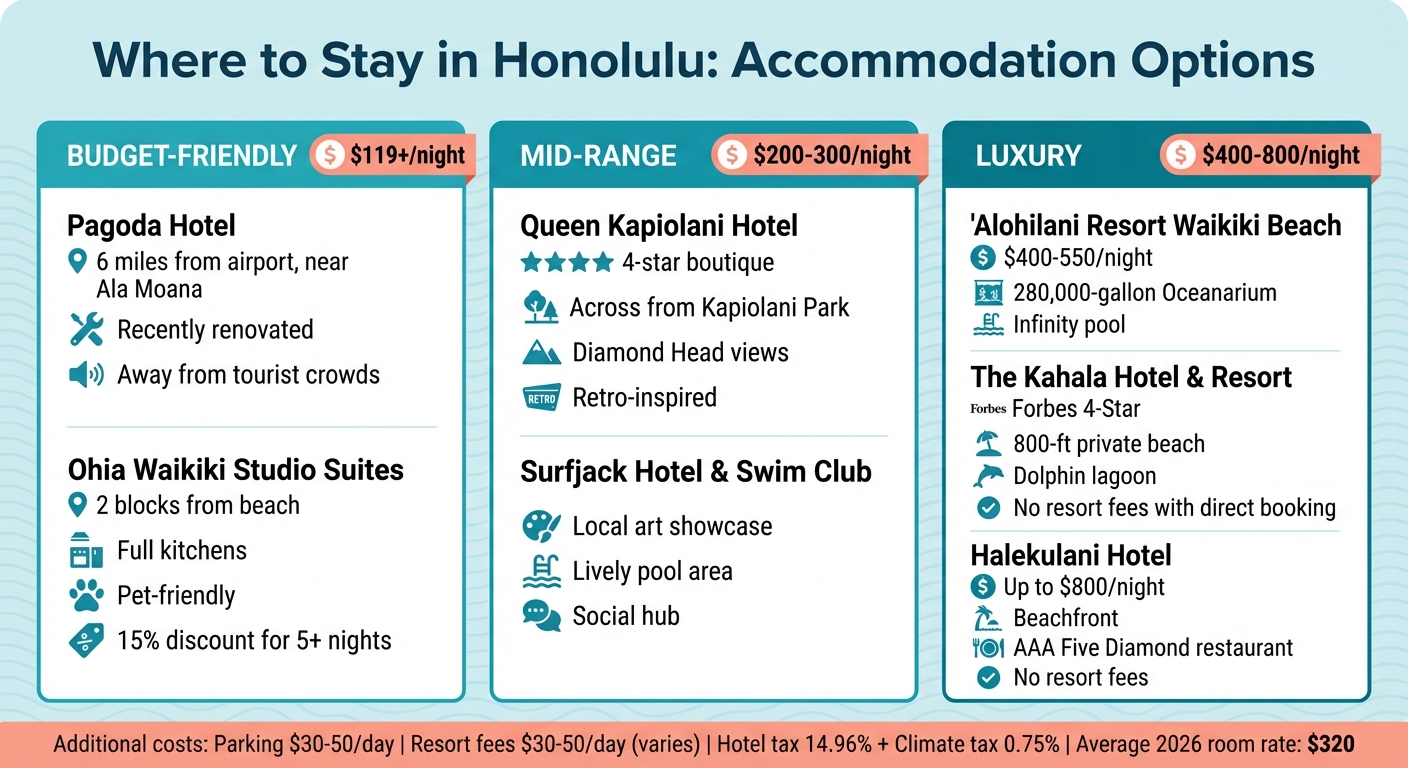
Honolulu Hotel Accommodation Price Comparison by Category
Honolulu offers a variety of accommodations to suit different budgets and preferences, from affordable hotels starting at $119 per night to high-end resorts going up to $800. Whether you're looking to explore the city's vibrant energy or unwind in a quieter area, there’s something for everyone. Here’s a breakdown of top choices across budget, mid-range, and luxury categories.
Budget-Friendly Hotels
Pagoda Hotel is a beloved local option located roughly 6 miles from Honolulu International Airport, away from the bustling Waikiki area. Positioned near Ala Moana and Downtown Honolulu, it provides easy access to Ala Moana Beach Park, Kakaʻako, and Chinatown. Rooms, starting at $119 per night, have been recently renovated, offering comfort without the tourist-heavy atmosphere.
Ohia Waikiki Studio Suites delivers apartment-style accommodations just two blocks from the beach and adjacent to the International Market Place. With full kitchens and flexible room setups, it’s ideal for families or extended stays. The property is pet-friendly and offers perks like a 15% discount for stays of five nights or more, as well as special monthly rates.
Mid-Range Hotels
Queen Kapiolani Hotel is a stylish 4-star boutique hotel located across from Kapiolani Park. Its retro-inspired decor and open-air pool, which offers views of Diamond Head, make it a standout option for travelers seeking charm and comfort.
Surfjack Hotel & Swim Club creates a uniquely Hawaiian experience by showcasing local art and craftsmanship. Its lively pool area doubles as a social hub, attracting both visitors and locals alike.
Luxury Hotels and Resorts
Halekulani Hotel, nicknamed the "House Befitting Heaven", boasts stunning beachfront views of Diamond Head and the Pacific Ocean. The hotel’s serene "Seven Shades of White" interior design sets a tranquil tone, and it stands out by not charging resort fees. Guests can also enjoy complimentary access to select cultural sites through the "For You, Everything" program. For fine dining, the on-site La Mer restaurant holds prestigious AAA Five Diamond and Forbes 5-Star ratings.
The Kahala Hotel & Resort offers a more secluded experience in the upscale Kahala district while staying close to the city center. This Forbes 4-Star property features an 800-foot private beach and a dolphin lagoon through Dolphin Quest. Recognized as the "Best Hotel Staycation" by the Honolulu Star-Advertiser in 2023, booking directly ensures a Best Rate Guarantee and eliminates resort fees.
'Alohilani Resort Waikiki Beach combines modern design with unique features like a two-story, 280,000-gallon "Oceanarium" in the lobby and an infinity pool with adults-only hours. Rooms are priced between $400 and $550 per night, making it a great choice for those who enjoy contemporary aesthetics and a lively atmosphere.
Keep in mind that many luxury hotels in Waikiki charge daily fees for parking and resort amenities, typically ranging from $30 to $50. Additionally, a 14.96% hotel tax and a 0.75% climate resiliency tax contribute to an average 2026 room rate of approximately $320.
Things to Do in Honolulu
Honolulu offers a mix of ocean adventures, historical landmarks, and serene natural escapes, catering to a wide range of interests.
Waikiki Beach and Nearby Spots
Waikiki Beach is the heart of Honolulu's water activities. Here, you can try surfing lessons, parasailing, or even take an outrigger canoe ride. This area is also the starting point for catamaran sunset sails and dinner cruises, making it a go-to for ocean lovers. If snorkeling is your thing, head to Turtle Canyon to spot Hawaiian green sea turtles. Prefer staying dry? The Atlantis Submarine offers an underwater experience without getting wet.
For breathtaking views, hike Diamond Head (Lēʻahi). It’s a must-visit, though non-residents should note the $5 per person or $10 per vehicle fee, and reservations are required up to 30 days in advance. Looking for a quieter scenic drive? Tantalus Drive offers incredible sunset views away from the bustling beaches.
Ocean tours in the area start at around $80, while full-day adventures, like those at Kualoa Ranch - famous for its Jurassic Park filming locations and ATV activities - range from $150 to $250 or more.
"Waikiki Beach is the launch pad for Oahu – you can snorkel with turtles, visit Pearl Harbor, explore Kualoa Ranch, loop the island, and enjoy luaus and sunset cruises all from one base." - Waikiki-Beach.org
Beyond the sandy shores, Honolulu is rich in history and culture, offering plenty to explore.
Museums, Historic Sites, and Natural Areas
The Bernice Pauahi Bishop Museum is a treasure trove of Hawaiian culture, housing over 24 million artifacts. Highlights include the Hawaiian Hall, an interactive planetarium, and rotating exhibits. In April 2026, the museum will host Aloha Bricks '26: Stories of Hawaiʻi, a LEGO®-themed exhibit showcasing Hawaiian history. Visitors can also join cultural workshops like "Kanikapila ma Kaiwiʻula" on April 11, 2026, to learn ʻukulele techniques.
For snorkeling enthusiasts, Hanauma Bay Nature Preserve is a must. Home to over 400 species of fish, this shore-accessible spot charges $25 per person (free for kids 12 and under). Reservations open 48 hours in advance at 7:00 AM HST and sell out quickly, so plan ahead. For a more tranquil nature outing, visit the sprawling 400-acre Hoomaluhia Botanical Gardens, where you can enjoy weekend catch-and-release fishing or admire the roaming peacocks.
History buffs should not miss Pearl Harbor, where the USS Arizona Memorial offers a poignant experience. Admission is free, with only a $1 reservation fee, but boat tour spots must be secured 56 days in advance. Many tours include transportation from Waikiki, making it easy to visit without needing a rental car.
Where to Eat in Honolulu
After soaking in Honolulu's vibrant attractions, it's time to dive into its equally colorful culinary scene. The city’s food culture is a reflection of its rich history, blending local traditions with global influences. From historic Hawaiian eateries to hidden gems tucked away in unassuming locations, there’s something to satisfy every craving.
Local Restaurants and Hawaiian Food
Helena's Hawaiian Food, established in 1946, is a must-visit for anyone seeking authentic Hawaiian flavors. Known for its pipikaula (dried short ribs), Helena's earned the prestigious James Beard America's Classics award in 2000. If it’s your first time, go for "Menu D" to sample a variety of traditional dishes. Keep in mind that parking can be a bit tricky, so plan ahead or consider using a ride-share service.
For a native Hawaiian-owned option, head to Waiahole Poi Factory in Kaneohe. Here, you can enjoy freshly prepared pa'i'ai (pounded taro), but it’s best to call ahead to reserve some before it sells out.
Another long-standing favorite is Highway Inn, which has been around since 1947. Known for its handmade lau lau, the restaurant also hosts "Pau Hana" nights with live local music on Wednesdays in Waipahu and Thursdays in Kaka'ako.
In Kaimuki, O'ahu Grill takes pride in its traditional cooking methods. They avoid shortcuts like liquid smoke in their kalua pig and steer clear of added sugar in their squid lū'au.
"Authentic Hawaiian food means no liquid smoke in our kalua pig and no added sugar in our squid lu`au." – O'ahu Grill
For budget-friendly options, Tanioka's Seafoods in Waipahu is the place to go for limu 'ahi poke. You can also grab a classic plate lunch - typically $10–$14 - at local eateries that serve hearty combinations of rice, macaroni salad, and protein. Don’t miss Liliha Bakery, famous for its Coco Puffs and buttery rolls with red jelly. If you’re a poke fan, grocery stores like Foodland and Times Supermarket offer fresh, affordable options priced around $10–$15, a steal compared to the premium bowls in tourist hotspots.
These spots provide a delicious introduction to Honolulu’s culinary offerings, but there’s plenty more to discover beyond the well-trodden paths.
Lesser-Known Restaurants and Food Experiences
For a truly unique experience, check out Da Seafood Cartel in 'Aiea. Operating out of a former gas station, this spot serves up ceviche and seafood tostadas. Bonus: it’s BYOB, which can save you on drink costs.
In Chinatown, Phở Tô Châu has been a go-to for pho lovers for over three decades. Just remember to bring cash since they don’t take cards. Nearby, Le's Banh Mi stands out for its house-made baguettes, which elevate their sandwiches to another level.
If you’re in the mood for something upscale, Sushi Gyoshin offers an exclusive 8-seat omakase experience. Chef Hiroshi Tsuji brings over 20 years of expertise in washoku to craft each course, but you’ll need to book well in advance.
Lady Elaine, nestled in Manoa Market Place, is a local treasure. Known for its inventive small plates like tender short rib and ahi carpaccio, the restaurant also serves cocktails that support community causes. Diners rave about the thoughtful touches, such as crocheted purse baskets, and the impeccable service, earning it a 4.8/5 rating from 54 reviews.
Meanwhile, Fête Hawaii made waves when Chef Robynne Maii became the first Hawai'i chef in nearly 20 years to win a James Beard award. For a more casual vibe, head to Mitch's Fish Market & Sushi Bar near the airport, where fresh seafood from around the globe is served in a no-frills, warehouse-style setting. Or, try Fort Ruger Market near Diamond Head, where poke bowls get an exciting twist with crispy-skinned lechon on top.
"Honolulu hangs onto its food and culture fiercely. It's why decades-old mom-and-pop restaurants still dominate certain neighborhoods." – Martha Cheng, Local Restaurant Writer
From iconic eateries to hidden gems, Honolulu’s food scene is a reflection of its deep cultural roots and creative spirit. Whether you’re indulging in traditional Hawaiian dishes or exploring modern takes, every bite tells a story of the island’s rich heritage.
Planning Your Honolulu Staycation
Smart preparation is the cornerstone of a memorable Honolulu staycation. With its tropical climate and mix of adventures, Honolulu calls for thoughtful planning to ensure you’re ready for everything from beachside relaxation to hiking through lush trails.
What to Pack
Honolulu’s year-round temperatures of 75°F to 85°F make lightweight, breathable clothing a must. Think linen, cotton, or merino wool, and don’t forget some stylish Aloha attire - floral shirts or breezy dresses are perfect for casual outings. Footwear essentials include flip-flops, comfortable sneakers, and water shoes for exploring beaches or tide pools.
Sun protection is non-negotiable. Pack reef-safe sunscreen with mineral-based formulas (free of harmful chemicals like oxybenzone or octinoxate), polarized sunglasses, and a wide-brimmed hat to guard against the tropical sun. A compact rain jacket will come in handy for unexpected showers, and for water activities, a dry bag or waterproof phone pouch is a smart addition. A sand-resistant microfiber towel is also worth bringing - it dries quickly and packs small.
"Local etiquette matters! Always rinse your feet before entering shops or homes from the beach, and avoid wearing swimwear into non-beach businesses." - Adam and Sophie Marland, Travel Writers
For packing efficiency, roll-up vacuum bags can compress bulkier items like sweatshirts or extra beachwear. Don’t forget tech essentials such as noise-canceling earbuds and a portable charger for your devices. Also, starting May 7, 2025, ensure you have a REAL ID-compliant license or passport for flights to Hawaii.
With these essentials, you’ll be ready to enjoy Honolulu’s blend of natural beauty and urban convenience.
Getting Around Honolulu
Honolulu offers plenty of transportation options to suit your plans. TheBus is an affordable choice at $2.75 per ride, connecting key areas like Waikiki, Pearl Harbor, and the North Shore. Consider picking up a HOLO card, a rechargeable transit pass available at local stores like ABC Stores or 7-Eleven, which caps daily fares at about $7.50.
For shorter distances, walking or rideshares (averaging $12–$40 per trip) are convenient, especially in Waikiki, where hotel parking fees can range from $30 to $60 per night. Biki bikes are a great alternative for quick trips, while renting a car for one or two days is ideal for exploring beyond the city - whether it’s catching a sunrise at Lanikai or venturing to the North Shore.
"Reserve a car when your island days outgrow Waikīkī sidewalks and the city bus schedule." - Honolulu Travels
If you choose to rent a car, expect daily costs of $70–$120, factoring in gas prices near Waikiki ($4.50–$5.50 per gallon) and parking fees. For a hassle-free option, consider a circle-island tour, which typically costs $130–$180 per person and includes hotel pickup and entry fees. Keep in mind that traffic on the H-1 highway can double travel times during rush hours.
When to Plan Your Staycation
Timing is everything when planning your Honolulu getaway. April, May, September, and October are ideal months to visit, offering fewer crowds, better rates, and pleasant weather. These months fall within the dry season (April to October), with April, May, and October being particularly favorable. If you’re planning a trip during peak times like July or late December, book accommodations and activities well in advance.
"April and May and September and October are the sweet spots - lower crowds, better prices, and weather that holds up across all islands." - John C. Derrick, Founder & Hawaii Travel Expert
For budget-conscious travelers, February and March often bring the lowest airfare and attraction prices, though you might encounter more rain. Seasonal highlights can also enhance your experience. Whale watching is at its best from January through March, while winter months (November–February) attract surfers to the North Shore with massive swells. In summer (June–August), calmer waters provide excellent snorkeling and beginner-friendly surf conditions. Don’t miss local events like Lei Day (May 1st), the Lantern Floating Festival in May, or King Kamehameha Day celebrations in June. Ocean temperatures during summer climb above 80°F, while daytime highs range from 78°F in January to 89°F in September.
With the right timing and preparation, your Honolulu staycation will be one to remember.
Conclusion
Honolulu offers the perfect blend of city life and peaceful getaways, all without the need for a long journey. Whether you're strolling through the vibrant streets of Waikiki or unwinding on the tranquil shores of Waimanalo, the island provides a mix of experiences that cater to both excitement and relaxation. A great way to enjoy your time is to combine the best of both worlds - spend a few nights soaking up resort luxuries and nightlife, then retreat to quieter areas for a more laid-back, local vibe.
"Oahu is full of hidden gems and remote beaches that will leave you daydreaming about your next trip back." - Erica Gellerman, Co-founder, The Hawaii Vacation Guide
To make the most of your staycation, plan ahead. Popular attractions can book up quickly, so securing reservations early is wise. Strike a balance between visiting cultural landmarks and exploring the outdoors. And don’t forget to support local businesses by dining at neighborhood restaurants and purchasing from Indigenous artisans.
"Choosing locally owned accommodations, dining at neighborhood eateries, and shopping from Indigenous artisans... not only offers an authentic experience but also boosts the island's economy." - Zita Cup Choy, Historian, 'Iolani Palace
A staycation in Honolulu goes beyond just convenience - it’s an opportunity to reconnect with the island’s rich culture and breathtaking landscapes. Be mindful of your impact by using reef-safe sunscreen, respecting local communities, and participating in activities like beach cleanups or reforestation projects. With careful planning and a thoughtful approach, your staycation can be both rejuvenating and meaningful.
FAQs
Do I need reservations for Diamond Head, Hanauma Bay, and Pearl Harbor?
Reservations are a must for certain iconic spots in Hawaii. Hanauma Bay requires reservations made 48 hours in advance, while Diamond Head allows bookings up to 30 days ahead. On the other hand, Pearl Harbor usually doesn't require reservations, but it's always a good idea to double-check the specific guidelines for each location to ensure a smooth visit.
Is it worth renting a car in Honolulu or using TheBus and rideshares?
Renting a car in Honolulu gives you the freedom to explore areas beyond Waikīkī, such as the scenic North Shore or popular sunrise spots. However, it comes with a price tag - expect to pay between $70 and $120 per day, including gas and parking fees. If you're sticking to Waikīkī, downtown Honolulu, or nearby attractions, TheBus and rideshares are more budget-friendly options. TheBus costs about $2.75 per ride, making it an affordable choice for getting around.
Your decision depends on your plans: if you're staying mostly in the city, TheBus works well. But for island-wide adventures, renting a car is the better option.
How much should I budget for hotel taxes, resort fees, and parking?
When planning your budget for a trip to Hawaii, set aside about 11% of your hotel costs for the state's Transient Accommodations Tax (TAT). On top of that, many hotels charge resort fees and parking fees, which can vary widely depending on the property. These extra charges can add up quickly, so make sure to review them beforehand to avoid any unexpected expenses.