A staycation is a way to take a break without traveling far, offering relaxation, cost savings, and convenience. Instead of flying or driving long distances, you explore local attractions, enjoy nearby parks, or even unwind at home. It's a practical option that eliminates travel stress and saves money while letting you recharge.
Key Takeaways:
- Why Staycations? Save 40–70% compared to traditional vacations. Skip flights, jet lag, and long itineraries.
- Cost Comparison: Regular trips average $244/day; staycations avoid airfare, lodging, and pet boarding costs.
- Local Perks: Rediscover nearby museums, parks, and restaurants. Many hidden gems are closer than you think.
- Planning Tips: Set a budget, mix free and paid activities, and consider mid-week stays for discounts.
- At-Home Options: Transform your space with themes like spa retreats or backyard camping.
Staycations are flexible and tailored to your needs, making them a great option for relaxation without the hassle of long-distance travel.
33 Fun Staycation Ideas Your Budget Will Love
sbb-itb-863a0bb
Why Choose a Staycation Over Regular Travel
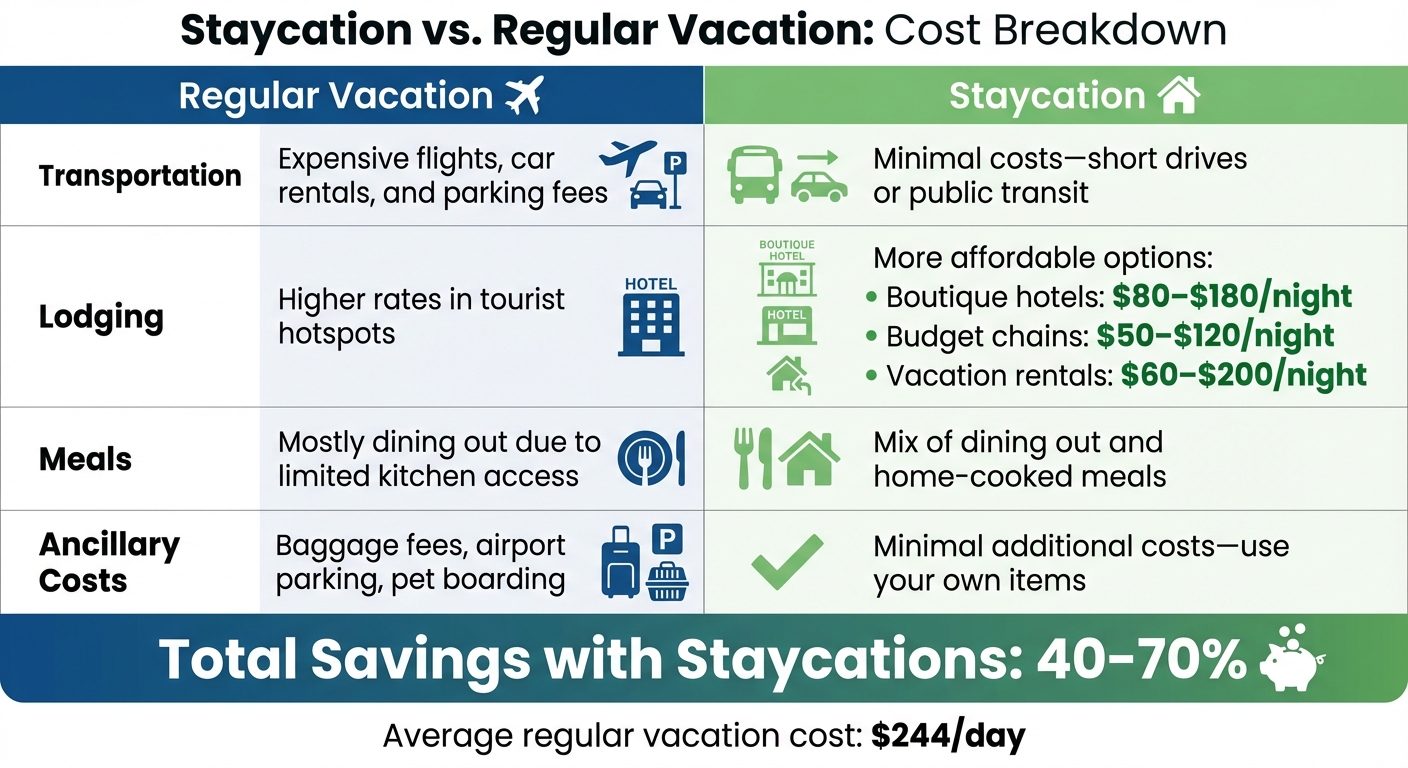
Staycation vs Regular Vacation Cost Comparison
Staycations offer many of the same perks as traditional vacations, minus the usual travel headaches. No long security lines, no jet lag, and no hours spent on planes or in cars. Instead, you can dive straight into relaxation. As Susan Albers, a psychologist at Cleveland Clinic, explains:
Vacations are essential. They're not optional... As a species, we struggle with monotony. When we do the same thing over and over again, it can make life feel tedious.
Staying local means you can recharge without the exhaustion that often comes with travel. You’re not dealing with complicated itineraries or juggling multiple destinations. Planning is straightforward, and even your pets can tag along - saving you the hassle and cost of boarding them. Plus, when the staycation ends, transitioning back to everyday life feels seamless since you’re already home.
Another bonus? You get to rediscover your own backyard. Many of us overlook the parks, museums, and quirky restaurants just around the corner. Acting like a tourist in your own city can reveal hidden treasures you might otherwise miss. Remember, the joy of travel often comes from experiencing something new - not necessarily going far. A themed boutique hotel or a guided walking tour can provide the same sense of novelty as a distant getaway.
And let’s not forget the environmental benefit. Staying local drastically cuts your carbon footprint. Skipping flights means fewer emissions, making a staycation a more eco-friendly choice.
Cost Comparison: Staycations vs. Regular Vacations
One of the biggest perks of a staycation? It’s much easier on your wallet. Avoiding long-distance travel can slash trip expenses by 40–70%. That extra cash can go toward indulgences like a spa day, a fancy dinner, or upgrading your accommodations.
Here’s a quick breakdown:
| Expense Category | Regular Vacation | Staycation |
|---|---|---|
| Transportation | Expensive flights, car rentals, and parking fees | Minimal costs - short drives or public transit |
| Lodging | Higher rates in tourist hotspots | More affordable options, like boutique hotels ($80–$180/night), budget chains ($50–$120/night), or vacation rentals ($60–$200) |
| Meals | Mostly dining out due to limited kitchen access | A mix of dining out and home-cooked meals |
| Ancillary Costs | Extras like baggage fees, airport parking, and pet boarding | Minimal additional costs - use your own items |
| Total Savings | - | Costs reduced by 40–70% |
Staycations also help you avoid airport parking fees and let you enjoy home comforts - like your favorite snacks or even your own pillow. Booking mid-week or during off-peak times can stretch your budget even further.
Less Travel Stress
Saving money is great, but the reduced stress of a staycation is just as appealing. Traditional vacations often start with a whirlwind of early flights, airport security, and long travel days - all of which can leave you feeling drained before you even start relaxing. With a staycation, those hassles are out of the picture.
Katie Broome, AAA Travel Editor, puts it perfectly:
A shorter trip closer to home - or even a staycation in your own backyard - offers many of the same mental and physical benefits as a traditional vacation, but with less stress and a lower price tag.
Planning becomes flexible, allowing you to make last-minute changes or simply go with the flow. Instead of managing logistics, you can focus entirely on unwinding. And since there’s no long-distance travel involved, your body can transition into relaxation mode right away. When it’s time to return to your routine, the shift feels effortless, leaving you refreshed and ready.
Discover Your Local Area
Staycations are also a chance to rediscover what’s right in front of you. Often, local attractions get pushed aside for "someday" or dismissed as being just for tourists. A staycation flips that perspective, encouraging you to explore nearby gems like historic districts, museums, or scenic trails.
These experiences can provide the same mental reset as traveling far away. It’s the act of trying something new - not the distance - that gives you that vacation buzz. For example, Cincinnati, Ohio, earned the title of top U.S. city for staycations in 2026, thanks to its abundance of parks and affordable, high-quality dining options.
To make the most of your staycation, consider planning micro-itineraries that mix free and paid activities. Spend the morning browsing a local farmers market, visit a museum or park in the afternoon, and end the day with dinner at a restaurant you’ve never tried. This approach keeps costs manageable while creating memorable experiences.
How to Budget for a Staycation
Start your staycation planning by setting a firm spending limit and breaking down expected costs. This should include lodging, activities, and smaller expenses like gas, parking, and tips. Once you've calculated your total estimated cost, compare it to your usual entertainment budget. If the staycation costs more than you typically spend, consider creating a sinking fund to save up gradually - like putting aside $10 a week for 10 weeks. Don’t forget to add a little extra for unplanned indulgences. As Nicole Dow puts it:
Having extra wiggle room in your staycation budget gives you the freedom to enjoy yourself without worrying about money.
Since you’re already saving 40–70% compared to a traditional vacation, you can redirect some of those savings toward splurge-worthy local experiences, like upgrading your room or treating yourself to a spa day. To keep your budget balanced, mix in free and low-cost activities alongside those higher-end treats.
Setting Aside Money for Activities and Entertainment
Blend free and paid activities to create a memorable staycation without overspending. Start by exploring community calendars and local blogs for free events like festivals, outdoor concerts, or pop-up markets. Your local library is another fantastic resource, often offering free museum passes, movie rentals, and even access to streaming services. For instance, Bank of America cardholders can take advantage of the "Museums on Us" program, which grants free admission to museums one weekend each month.
For paid experiences, check out platforms like Groupon for discounts on attractions such as escape rooms, axe throwing, or rock climbing. National parks often have fee-free days, and events like the Smithsonian Magazine's annual free museum day can also help you save. A thoughtfully planned itinerary that combines free and paid activities - like visiting a farmers market in the morning, enjoying a museum with free admission in the afternoon, and ending the day with a special dinner - can make your staycation feel both exciting and budget-friendly.
You can also get creative with what you already have at home. Use board games, craft supplies, or pantry staples for themed nights, family bake-offs, or DIY spa days. A backyard camping experience or an at-home spa setup with existing items can feel just as special with a little effort.
Finding Affordable Places to Stay
Lodging often takes up the biggest chunk of your budget, but timing and smart planning can help reduce costs. Booking mid-week or during less popular travel seasons can help you avoid higher weekend and holiday rates. For example, a Tuesday-to-Thursday stay at a boutique hotel is usually cheaper than a weekend booking.
Choose the type of accommodation that suits both your needs and your budget. Here’s a quick look at typical price ranges:
- Budget chain hotels: $50–$120 per night
- City boutique hotels: $80–$180 per night
- Vacation rentals or aparthotels: $60–$200 per night
- Glamping sites or cabins: $70–$220 per night
- Day-use hotels or microstays: $30–$80
Joining hotel loyalty programs can also pay off. These free memberships often come with perks like free breakfast, room upgrades, or late checkouts, which can enhance your stay without extra cost. When comparing options, prioritize deals that include extras like breakfast or parking, as they often offer better value than simply choosing the lowest nightly rate.
For tailored, budget-friendly deals specific to local stays, platforms like StaycationNearMe.com can help uncover options you might not find on larger booking sites. Finally, bringing along personal touches like your favorite pillow, a travel candle, or high-end toiletries can make even a modest room feel more luxurious.
Planning Activities for Your Staycation
The secret to a great staycation is treating it as seriously as you would a vacation away from home. That means stepping away from work and daily routines. Set up an "out of office" email reply and enforce a no-phones rule during designated hours. Before diving into your staycation, take care of household chores so your home feels like a true getaway. As The Cut advises:
Set up your space in advance. Clean up. Clean out your fridge. Do your laundry. Clean your bathroom. Change the sheets on your bed. Don't leave yourself chores to do on vacation.
Fresh sheets on the first morning can make your bed feel like a hotel experience and set the tone for your staycation.
Local Attractions and Experiences
You might be surprised by the hidden treasures in your own area. Start by browsing your state or regional tourism board website, which often organizes activities by interests like "Aerial Adventures", "Science and Tech Tours", or "Spas & Wellness". Look for Scenic Byways or Heritage Trails that string together multiple historic or natural sites. Routes such as the Turquoise Trail or the Enchanted Circle can offer a full day of fun with minimal planning.
If you’re into nature, consider visiting Dark Sky Parks or National Wildlife Refuges for unique experiences like stargazing or birdwatching - activities often overlooked by tourists. A week-long vehicle pass to a national park is $35, or you can invest in the $80 America the Beautiful Annual Pass, which grants access to all national parks for a year. Traveling with kids? The National Park Service’s free Junior Ranger program is a great way to keep them entertained without extra cost. Not feeling the urge to venture out? You can always transform your home into a themed retreat.
Themed Staycations at Home
If staying in sounds more appealing, a themed staycation can make your home feel like a whole new world. Turn your space into a spa retreat with ambient lighting, calming music, and simple touches like string lights to create a relaxing atmosphere. Use bath products you already have on hand, and dedicate a few hours to self-care with face masks and other spa treatments.
Adding Luxury on a Budget
Pampering yourself doesn’t have to mean overspending. Keryn Means, Founder and Editor-in-Chief of Twist Travel Magazine, recommends focusing on one indulgence:
Pick one thing that feels special and do it without guilt; you already budgeted for some extra fun.
This could be a fancy dinner at a restaurant you've been wanting to try, a professional photoshoot for your family, or a day pass at a nearby resort with pool access. Balance this splurge with free activities like hiking local trails, visiting public beaches, or watching a beautiful sunset. As Means points out:
Free doesn't mean boring. Some of our best travel memories cost nothing. Watching sunsets. Playing on beaches. Hiking trails.
If you decide to book a hotel, consider staying in nearby suburbs or "gateway" areas where rates are often lower but still close to attractions. Save even more by packing a cooler with snacks, and use those savings for your chosen luxury treat. With a little planning, your staycation can feel indulgent without breaking the bank.
How to Find Local Attractions and Places to Stay
Planning the perfect staycation doesn't have to be overwhelming. With the right tools and resources, you can uncover a mix of staycation activities and accommodations that make your time off feel just as exciting as a faraway trip. Here's how to simplify the process and find the best spots nearby.
Using City and State Guides
Your local tourism board is a treasure trove of ideas tailored specifically for residents. Many now feature dedicated "Stay Local" sections, offering curated itineraries and event highlights. For example, Destination DC launched its "Stay Local DC" guide on washington.org, running from January to March 2025/2026. This guide spotlighted events like the DC Chocolate, Wine and Whiskey Festival on February 8 and the Capitol Hill Volleyball Classic from February 15-17. It also promoted over 100 free activities to encourage locals to explore their city during the winter months.
These guides often break down activities by season and interest, making it easier to plan around specific events. For instance, Winter Restaurant Week (January 13-19) offered discounted multi-course meals at top restaurants, while family-friendly options like SpyFest at the International Spy Museum (January 31) provided interactive, espionage-themed fun. Many guides also include sections for "hidden gems" - spots like boutique cafes, independent hotels, or lesser-known historical sites that offer a quieter, more unique experience. Specialized maps can be particularly helpful, distinguishing between big-name landmarks and these under-the-radar finds.
Staycation Booking Platforms
Once you've mapped out your activities, finding the right place to stay is key. Platforms like StaycationNearMe.com are designed specifically for nearby getaways, making it easy to find accommodations that feel special. These sites organize options by categories like luxury hotels, boutique stays, romantic retreats, or last-minute deals, helping you narrow down choices based on your budget and preferences. Unlike larger booking engines that prioritize volume, these platforms often highlight smaller, independent properties that might otherwise go unnoticed.
For the best deals, compare listings across multiple platforms. Check the hotel's official website and any loyalty programs you belong to for member-only perks like free breakfast, parking, or room upgrades. Following local hotels on social media can also help you spot flash sales or last-minute markdowns that significantly reduce rates. If you're considering private rentals, take precautions: verify host credentials, look for recent guest photos, and read consistent reviews. Always book through secure platforms and use a credit card for added protection against scams.
Picking the Right Length and Packages
How Long Should a Staycation Last
The ideal duration for a staycation depends on your schedule and how much relaxation you're aiming for. A 2–3 day getaway is perfect for a quick recharge over the weekend without dipping into your vacation days. These shorter trips can help you unwind and reset without interrupting your work routine. If you're craving a more substantial break, a 5–7 day staycation allows for deeper relaxation and a true mental reset. For those seeking a more immersive experience, an extended stay of 10 days or more lets you explore your area in-depth, offering the chance to discover multiple neighborhoods and dive into local experiences.
Interestingly, the benefits of a staycation don’t hinge on traveling far. As Charles Duhigg explains:
It's not about physical distance - it's about mental distance.
The trick lies in planning activities that feel fresh and engaging. This could be as simple as spending a night at a boutique hotel, taking a week to explore new parts of your city, or even enjoying day trips for hiking, fishing, or visiting a museum. What matters is that these activities feel restorative and offer a break from the norm.
Once you’ve decided on the length of your staycation, the next step is finding a package that aligns with your plans.
How to Evaluate Staycation Packages
Choosing the right staycation package can make all the difference in creating a relaxing, cost-effective, and enjoyable experience. The key is to focus on what you’ll actually use and avoid paying for extras that don’t add value to your trip.
Sharon Nolan from AAA Club Alliance offers this practical advice:
Don't let things you won't use cloud your choice. A venue with free parking but you won't have a car? You don't need that.
Be selective about amenities. For example, pet-friendly options or free breakfast won’t matter if they don’t fit your plans. Instead, look for packages that include perks you’ll use, such as complimentary breakfast, yoga classes, bicycle rentals, or spa access.
Take Catherine Oliva’s experience as an example: in February 2026, she booked a 4-day staycation in Sedona and specifically chose a hotel offering free breakfast to offset the area’s high dining costs. She explained:
Hotels can be expensive... so we intentionally chose one that included breakfast.
For families or those planning longer stays, accommodations with kitchenettes or refrigerators can significantly reduce meal expenses. Some packages even include access to amenities at nearby sister properties, such as dining, pools, or rooftop lounges, giving you more value for your money.
Booking mid-week is another way to save, as rates are often lower. When reading reviews, prioritize the most recent ones and focus on feedback about features that matter to you. Properties just outside the city center can also offer better prices and a more relaxing atmosphere while keeping you close to major attractions.
Conclusion
A successful staycation starts with treating it like a real getaway. As Tess Victoria from Sherpani puts it:
With no geographical journey to help put you in 'vacation mode,' the shift has to happen internally.
This means setting clear boundaries - activate your out-of-office message, unplug from your phone, and steer clear of household chores. Making this mental shift is key to enjoying the freedom and affordability that make staycations so appealing.
The charm of a staycation lies in its adaptability and cost-effectiveness. Whether you're planning a quick 2–3 day weekend retreat or a full week of local adventures, you can create unforgettable moments without the hassle of long-distance travel. Look for deals that come with perks you'll actually enjoy, and consider affordable options like the $80 America the Beautiful National Parks annual pass, which covers entrance fees for your entire family. Picking the right packages and local activities can help you craft a relaxing and stress-free break.
Take on the mindset of a tourist to elevate your staycation experience. Explore local museums, join specialty tours, or wander through neighborhoods you’ve never taken the time to visit. If you're staying home, add a resort vibe with simple touches like string lights, aromatherapy, or even hiring a professional cleaning service. You could also treat yourself to one indulgence - perhaps a fancy dinner or a spa day - to sprinkle in a bit of luxury.
Above all, a staycation isn’t the time to tackle to-do lists or catch up on projects. It's your chance to rest and recharge. Sleep in, switch off your alarm, and focus on activities that genuinely restore your energy. The aim is to return to your routine feeling renewed, not worn out.
FAQs
How do I make a staycation feel like a real vacation?
To turn a staycation into something that feels like an actual getaway, approach it like a true vacation. Start by stepping away from your usual routines - turn off those notifications, plan a spa day, or dive into some calming activities. You could revisit your favorite local hangouts or try something new in your area. Make it all about unwinding and having fun, steering clear of chores or daily responsibilities. The idea is to create that "vacation vibe" and allow yourself to fully recharge, even from the comfort of home.
What’s a realistic staycation budget for my city?
A staycation budget can vary widely based on where you live and what you plan to do. For low-key, at-home activities, you might spend around $50-$100. If you’re thinking about adding hotel stays, dining out, or visiting local attractions, the cost could climb into the hundreds. To keep your finances in check, jot down all expected expenses and make sure your budget aligns with your plans and local prices.
How do I find hidden-gem attractions near me?
Exploring local tourism websites, staycation guides, or articles focused on lesser-known destinations can help you uncover hidden gems in your area. Think along the lines of tucked-away museums, scenic outdoor escapes, or quirky city attractions that often fly under the radar. City tourism sites and curated feature articles are great tools for finding these off-the-beaten-path experiences, making it simple to discover local treasures and plan an unforgettable staycation right in your own backyard.