Portland is an ideal destination for a staycation, offering a mix of urban attractions, natural beauty, and vibrant neighborhoods. Whether you're into art, food, or outdoor adventures, the city has something for everyone. Here's a quick look at what makes Portland stand out:
-
Top Neighborhoods:
- Pearl District: Upscale dining, art galleries, and Powell's City of Books.
- Nob Hill: Victorian charm, boutique shopping, and family-friendly vibes.
- Central Eastside: Breweries, live music, and a creative nightlife scene.
- Hawthorne: Vintage shops, food carts, and a laid-back atmosphere.
- Downtown: Easy access to museums, tax-free shopping, and public transit.
-
Must-See Attractions:
- Forest Park: 70 miles of trails in an urban forest.
- International Rose Test Garden: Over 10,000 rose bushes.
- Mount Tabor Park: Hikes on a dormant volcano with skyline views.
- Powell’s City of Books: The largest independent bookstore in the world.
-
Getting Around:
- Public Transit: MAX Light Rail and Portland Streetcar are affordable and efficient.
- Walking/Biking: Compact neighborhoods make exploring easy.
- Ride-Share/Car: Best for trips outside the city or late-night outings.
-
Budget Tips:
- Lodging ranges from $75 to $355 per night, with options for every budget.
- Food carts and happy hours offer great meals at lower prices.
- Free or low-cost attractions like parks and markets help save money.
Portland’s mix of culture, nature, and local businesses ensures a memorable trip. Dive into the city’s diverse neighborhoods and discover its hidden gems.
48 Hours in Portland: The Perfect Weekend Itinerary (20+ Stops)
sbb-itb-863a0bb
Best Neighborhoods to Explore in Portland
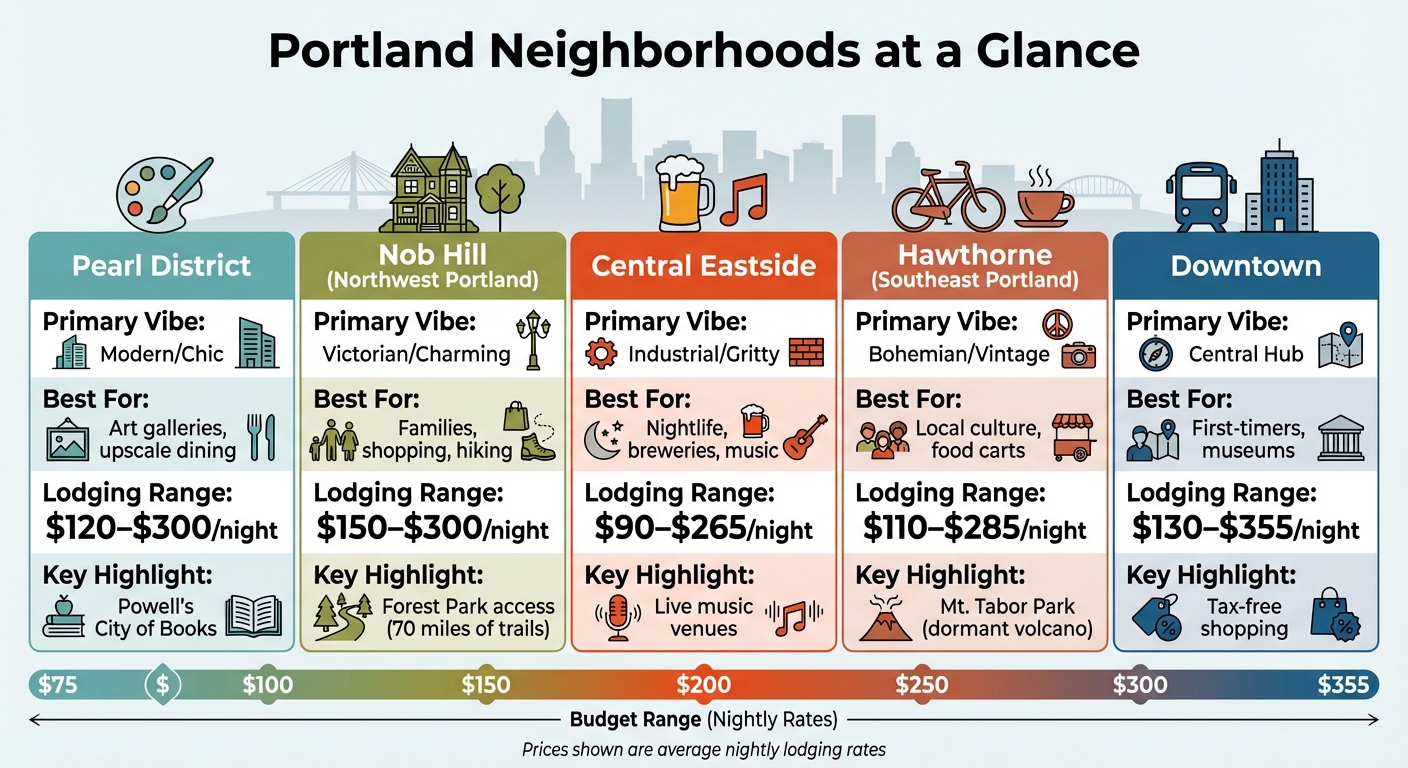
Portland Neighborhood Comparison Guide: Vibe, Activities and Lodging Costs
Picking the right neighborhood can shape your entire Portland experience. The city splits into two distinct vibes: the polished, trendy Westside (Downtown, Pearl District, Nob Hill) and the vibrant, eclectic Eastside (Central Eastside, Hawthorne).
Portland's layout is defined by Burnside Street and the Willamette River, splitting the city into six main sections: North, Northeast, Northwest, South, Southeast, and Southwest. This grid-like organization makes it easier to navigate and zero in on the neighborhood that fits your interests.
| Neighborhood | Primary Vibe | Best For | Lodging Range |
|---|---|---|---|
| Pearl District | Modern/Chic | Art galleries, upscale dining | $120–$300/night |
| Nob Hill | Victorian/Charming | Families, shopping, hiking | $150–$300/night |
| Central Eastside | Industrial/Gritty | Nightlife, breweries, music | $90–$265/night |
| Hawthorne | Bohemian/Vintage | Local culture, food carts | $110–$285/night |
| Downtown | Central Hub | First-timers, museums | $130–$355/night |
Each neighborhood has its own personality, offering unique activities and accommodations to suit different tastes. Let’s dive into what makes each area special.
Pearl District: Modern Urban Experience
The Pearl District, once a hub of warehouses, is now one of Portland's most polished areas. Its cobblestone streets are lined with sleek high-rises, upscale restaurants, and contemporary art galleries. It's also home to Powell's City of Books, the world's largest independent bookstore, which takes up an entire city block.
"If you're looking for the eccentric side of Portland, the Pearl District might not be your first choice." – Diana Flowers, Local Guide
For art lovers, visiting during First Thursday (April through October) is a must. Galleries stay open late, and the streets buzz with art enthusiasts. With boutique shopping, refined dining, and easy access via the Portland Streetcar, the Pearl District is perfect for a sophisticated, culture-filled getaway.
Next, step into Nob Hill's timeless charm.
Northwest Portland (Nob Hill): Victorian Charm and Family Activities
Nob Hill offers a glimpse into "Old Portland" with its tree-lined streets and beautifully preserved Victorian homes. Many have been converted into charming boutiques and cafes. NW 23rd Avenue is the heart of the neighborhood, bustling with shopping, while NW 21st Avenue serves up dining options ranging from casual to upscale.
Nature lovers will appreciate the proximity to Forest Park, a sprawling 5,156-acre green space with 70 miles of trails. Families will feel at ease here too, as the area ranks among the safest in Portland, with 89% of neighborhoods falling below its safety level. For a budget-friendly treat, head to Life of Pie during happy hour for an $8 wood-fired margarita pizza. The neighborhood is highly walkable and well-connected to Downtown and the Pearl District via the Streetcar.
Looking for something more offbeat? Southeast Portland might be the answer.
Southeast Portland: Local Culture on a Budget
Southeast Portland is where the city’s quirky, laid-back spirit truly shines. Anchored by Hawthorne Boulevard, the area is packed with vintage shops, independent bookstores, and casual eateries. Nearby Mt. Tabor Park, perched on a dormant volcano, and the historic Ladd's Addition offer scenic trails and picturesque strolls.
With lodging options ranging from $110 to $285 per night, this neighborhood is a great choice for travelers on a budget. However, public transit here is limited, so bikes or ride-shares might be your best bet for getting around.
For a more industrial vibe, check out Central Eastside.
Central Eastside (Buckman): Breweries and Music Venues
Central Eastside is where Portland’s nightlife and creative energy collide. This former warehouse district is now home to a dense collection of breweries, music venues like Holocene and The Get Down, and unique spaces such as Hopscotch, an interactive art gallery.
"Central Eastside... encapsulates some of [Portland's] quintessential draws: exceptional food and drink, incredibly niche shops and galleries, [and] live music." – Brooke Jackson-Glidden, Editor
This gritty yet lively neighborhood is a magnet for younger travelers looking for something different. Highlights include Knot Springs, a modern wellness club offering communal bathing experiences (advanced booking is a must). Lodging options here reflect the area's character, from the social vibe at KEX Hotel to boutique stays like Jupiter NEXT.
Finally, let’s explore Downtown Portland, the city’s central hub.
Downtown Portland: Easy Access to Everything
Downtown is Portland’s transportation and cultural hub, with MAX light rail, buses, and the Streetcar all converging here. It’s home to iconic landmarks like Pioneer Courthouse Square - often called "Portland's Living Room" - the Portland Art Museum, and Tom McCall Waterfront Park.
"While Downtown may lack quaint charm, it remains essential for visitors, as it's home to major hotels and sights." – Becky Ohlsen, Writer
Though it might not have the cozy feel of other neighborhoods, Downtown’s practical perks make it a solid choice. It boasts the highest density of hotels, ranging from luxury stays like The Nines ($240–$355/night) to budget-friendly chains. Plus, tax-free shopping at Pioneer Place is a big draw for visitors.
Things to Do During Your Portland Staycation
Portland offers a treasure trove of experiences across its 18,000 acres of parks and natural spaces. Whether you’re a fan of art, nature, or nightlife, the city has something for everyone. Here’s how you can make the most of your staycation.
Museums, Bookstores, and Arts
The Portland Art Museum has undergone a $111 million transformation, boasting the Mark Rothko Pavilion and expanded galleries. For a more focused dive into local history, visit the Japanese American Museum of Oregon or the Portland Chinatown Museum, both preserving stories tied to Portland’s neighborhoods.
Book lovers can’t miss Powell’s City of Books, a haven for bibliophiles. For something offbeat, Mother Foucault's in the Central Eastside offers rare and foreign-language books. Meanwhile, the Oregon Historical Society provides a fascinating look into the region’s past.
Once you’ve soaked up the city’s cultural gems, step outside and explore Portland’s natural beauty.
Parks and Outdoor Activities
Forest Park is one of the largest urban forests in the U.S., featuring 70 miles of trails. A favorite is the 4.9-mile trek from Lower Macleay Park to Pittock Mansion, offering incredible views. For a mix of city and nature, the 4T Trail combines hiking, a tram ride, a trolley, and a train journey.
Washington Park is a central hub for outdoor fun, home to the International Rose Test Garden, Portland Japanese Garden, Hoyt Arboretum, and the Oregon Zoo. For a unique vantage point, head to Mount Tabor Park, set on an extinct volcanic cone - perfect for sunset picnics. If you’re craving a peaceful retreat, the Lan Su Chinese Garden offers a serene escape with Ming Dynasty-style architecture, created in collaboration with Portland’s sister city, Suzhou.
| Park/Space | Activity | Best For | Highlight |
|---|---|---|---|
| Forest Park | Hiking | Deep woods immersion | 70 miles of scenic trails |
| Mount Tabor | Picnicking | Sunset views | Perched atop an extinct volcano |
| Washington Park | Sightseeing | Families and tourists | Proximity to gardens, zoo, and museums |
| Powell Butte | Hiking/Biking | Panoramic views | 608 acres with nine miles of trails |
| Lan Su Garden | Quiet Reflection | Cultural experience | Authentic Ming Dynasty-inspired design |
From the outdoors, dive into Portland’s vibrant dining and shopping options.
Where to Eat and Shop
In Old Town-Chinatown, you’ll find a mix of historic landmarks and modern BIPOC-owned shops. Lilia Comedor offers a fusion of Pacific Northwest and Mexican-American flavors, with chef’s counter experiences priced between $90 and $110. For a more budget-friendly option, Departure Restaurant + Lounge serves items like cheeseburger bao during happy hour, from 4 p.m. to 6 p.m..
The Central Eastside is a hotspot for industrial-chic dining, with standouts like Hat Yai, Kachka, and Canard, along with global eats at the Lil’ America food cart pod. Don’t miss the Portland Saturday Market, where local artisans and live performers bring the waterfront to life. Keep in mind that reservations are often needed for popular restaurants, sometimes up to a month in advance.
Bars, Breweries, and Live Music
Portland’s nightlife thrives with an eclectic mix of venues. In the Central Eastside, spots like Holocene and The Get Down feature independent music acts, while Old Town-Chinatown buzzes with energy at Roseland Theater and Dante’s. For a quieter vibe, check out the speakeasy Voysey or the quirky Rimsky Korsakoffee House.
If you’re looking for something unique, Darcelle XV Showplace - one of the oldest drag clubs in the U.S. - hosts a Sunday drag brunch that includes a plated meal with the cover charge. For a different kind of interactive fun, the Hopscotch art gallery in the Central Eastside offers installations like "Diodic Daydream", a large-scale ball pit for grown-ups.
Activities for Families with Kids
Portland’s neighborhoods cater to families with plenty of kid-friendly options. Washington Park is an all-in-one destination, with the Oregon Zoo, rose gardens, and Japanese Garden all within walking distance. The Oregon Museum of Science and Industry (OMSI) is another favorite, offering hands-on exhibits that spark curiosity.
For outdoor-loving families, Laurelhurst Park features a duck pond, sports courts, and off-leash dog areas. Oaks Bottom Wildlife Refuge is perfect for budding birdwatchers, with over 175 species calling the 170-acre area home. And for a touch of mystery, explore the "Witch’s Castle", a stone ruin tucked away in Forest Park and accessible via the Lower Macleay Trail.
How to Get Around Portland
Portland's TriMet system oversees the MAX Light Rail, buses, and the Portland Streetcar. The MAX Light Rail serves as the backbone of the city's public transit, featuring five color-coded lines (Blue, Red, Green, Yellow, and Orange) that all pass through downtown. With over 90 stations spanning 60 miles of track, it’s a comprehensive system for getting around. For shorter trips within central neighborhoods like the Pearl District or South Waterfront, the Portland Streetcar offers three loops covering 7.35 miles in the heart of the city. Below, you'll find specific options for navigating Portland based on your preferred mode of travel.
Using Public Transportation
For seamless public transit access, download the Hop Fastpass app for contactless payments or grab a reloadable card from local retailers. Adult fares cost $2.80 for 2.5 hours, while a day pass is $5.60. Youth fares are half-price at $1.40. More than a dozen bus lines provide Frequent Service, arriving every 15 to 20 minutes throughout the day. The MAX Red Line conveniently connects Portland International Airport (PDX) to downtown. A standout feature of the transit system is Tilikum Crossing, a bridge dedicated solely to light rail, buses, cyclists, and pedestrians - cars are not permitted.
Walking and Biking in Portland
If public transit doesn’t fit your plans, Portland’s compact layout makes it easy to explore on foot or by bike. Areas like the Alberta Arts District, Pearl District, and Northwest 23rd Avenue are designed with pedestrian-friendly grids, making them ideal for walking. Cyclists can take advantage of Biketown, a fleet of over 2,000 electric bikes available via a mobile app. For those combining biking with public transit, most TriMet buses are equipped with bike racks. Dedicated bike trails, such as the South Waterfront Greenway, stretch from the River Forum Building to the Marquam Bridge, offering scenic routes for riders.
When You Need a Car or Ride-Share
While public transit and active travel cover most needs, some trips call for a car or ride-share. The Central Eastside tends to experience heavier traffic along major corridors like MLK and Grand. For destinations outside the city, such as the Willamette Valley wine region or the Columbia River Gorge, having a car or using a ride-share service is more practical. Ride-shares are also a great option for safe returns after late-night outings. Keep in mind that public transit only allows small pets in secure carriers, so if you’re traveling with a larger dog, a car or ride-share will be necessary. Additionally, ride-shares are ideal for bar crawls through Portland's breweries or distilleries, ensuring you don’t have to worry about driving after drinking.
Planning Your Trip: Budget and Schedule
Affordable and Upscale Options
Portland offers staycation options that fit almost any budget. You’ll find rentals ranging from $75 to $150 per night, with discounts for weekly or monthly stays. Neighborhoods like Kerns, Brooklyn, St. Johns, and Montavilla are not only affordable but also provide easy access to local attractions. Booking directly through local management platforms can help you avoid third-party fees and hidden charges, saving you even more money.
For a touch of luxury, consider splurging on chef's counter dining experiences, such as Lilia Comedor, where prices range from $90 to $110 per person. Boutique hotels like Hotel Grand Stark, Jupiter NEXT, and Kex Portland offer stylish accommodations with a unique urban vibe. If you’re looking for daytime options, many hotels offer day-use stays from 9 AM to 6 PM for around $99.53, which includes access to amenities like pools, gyms, and rooms - often at a significant discount compared to overnight rates.
To stretch your budget while enjoying upscale experiences, mix and match. For example, take advantage of weekday happy hours (4 PM to 6 PM) at high-end venues for discounted appetizers and drinks. Portland’s famous food cart pods also serve top-notch meals at wallet-friendly prices. Opting for a rental with a fully stocked kitchen lets you save even more by preparing some of your meals at home.
With smart planning, you can balance indulgence and savings, making the most of Portland’s diverse neighborhoods and attractions. Next, let’s look at sample schedules tailored to different trip lengths.
Sample Schedules for Different Trip Lengths
If you’re staying for just 1–2 nights, focus on exploring a single neighborhood. For instance, in Old Town-Chinatown, you could visit the Lan Su Chinese Garden and enjoy a traditional drag brunch at Darcelle XV. Alternatively, the Central Eastside offers a lively food and bar scene, which you could pair with a relaxing morning soak at Knot Springs. Just be sure to book popular activities like the soak at least a month in advance.
For a weekend or 3-day trip, combine neighborhood exploration with time set aside for nature and the arts. In April 2024, Eater Portland editor Brooke Jackson-Glidden shared a Central Eastside itinerary that begins with a Friday night bar crawl at Canard, followed by a Saturday morning soak at Knot Springs, and a Sunday visit to the Hopscotch interactive gallery. You could round out your weekend by exploring Washington Park or the Portland Art Museum, and then take a scenic walk along the Willamette River waterfront.
A week-long stay offers the opportunity to dive deeper into Portland’s districts. Start with high-energy activities like concerts at Roseland Theater or nightlife in Old Town. Mid-week, slow things down with a spa day at a day-use hotel or a tea tasting at Smith Teamaker. Spend your remaining days shopping for antiques at Memory Den or books at Powell’s and Mother Foucault’s. Balance your week by mixing splurge-worthy meals with casual bites from food carts or a laid-back dinner at Hat Yai.
Best Times of Year to Visit
Once you’ve mapped out your itinerary, think about the best time to visit. Late spring and summer are perfect for enjoying Portland’s outdoor attractions. The International Rose Test Garden is a must-see during these months, with its vibrant blooms and intoxicating fragrance. Autumn, on the other hand, paints the city in warm colors, particularly at Tom McCall Waterfront Park, where the fall foliage creates a stunning backdrop along the Willamette River.
If your trip falls during the rainy or colder months, Portland still has plenty to offer. Indoor attractions like the Oregon Museum of Science and Industry (OMSI), the Portland Art Museum, or a tour of the Haunted Underground Shanghai Tunnels provide engaging experiences. Keep in mind that many major attractions close on Mondays and sometimes Tuesdays, so plan your mid-week activities accordingly.
For a taste of local artisan culture, don’t miss the Portland Saturday Market, open from 10 AM to 5 PM. And if the Japanese Garden is on your list, remember it’s closed on Tuesdays, so plan your visit for another day.
Conclusion
When planning a Portland staycation, the city’s neighborhoods each bring their own mix of character, nature, and culinary experiences. With over 90 neighborhoods to explore, there’s something for everyone - whether it’s the sleek, urban feel of the Pearl District or the creative energy of the Central Eastside. From iconic spots like the International Rose Test Garden to Powell’s City of Books, Portland packs a lot of charm into its walkable layout. As local writer Diana Flowers puts it:
"Portland is the biggest city in Oregon, but compared with other West Coast cities like Seattle, San Francisco or Vancouver BC, it can feel like a small town".
A staycation here offers a mix of affordability and style. You could stroll through Mount Tabor’s volcanic park, catch a show at Darcelle XV Showplace - one of the oldest drag clubs in the U.S. - or lose yourself in the tranquility of the Lan Su Chinese Garden, created in partnership with Suzhou, Portland’s sister city in China. The city’s diversity of experiences ensures there’s something to match every interest.
Portland also makes it easy to stick to your budget. Accommodations range from boutique hotels at $90 per night to upscale dining experiences at chef’s counters costing $90–$110 per person. Plus, getting around is a breeze with options like the MAX light rail, Portland Streetcar, and bike-friendly streets. Whether you’re planning a quick overnight trip or a week-long exploration, the city invites you to discover its layers.
Pick a neighborhood, plan a mix of activities, and leave room for surprises. The city’s magic often lies in the unexpected - like stumbling upon a BIPOC-owned coffee shop that merges sneaker culture with espresso or discovering a hidden bar in a repurposed warehouse. Portland’s neighborhoods offer endless opportunities to create a staycation as distinctive as the city itself.
FAQs
Which Portland neighborhood fits my vibe best?
Portland has a neighborhood for just about every lifestyle. If you're drawn to vibrant nightlife and a quirky, creative atmosphere, Hawthorne, the Alberta Arts District, or Old Town-Chinatown might be your scene. For those who lean toward an upscale, artistic vibe, consider The Pearl District or Nob Hill. Looking for a strong sense of community and lively energy? Areas like Lloyd or Hollywood in Northeast Portland could be ideal. Each spot brings its own blend of culture, dining, and local attractions to the table.
How can I do a Portland staycation without a car?
Portland makes it simple to enjoy a staycation without needing a car, thanks to its walkable neighborhoods, reliable public transit, and bike-friendly layout. You can explore vibrant areas like downtown, the Pearl District, or the Alberta Arts District by hopping on a bus, taking the MAX light rail, or just strolling around. Prefer cycling? Portland has you covered with plenty of bike lanes and rental options. Whether you're visiting parks, sampling local cuisine, or checking out cultural hotspots, getting around without driving is a breeze.
What are the best rainy-day staycation ideas in Portland?
Portland has no shortage of indoor activities to make a rainy-day staycation enjoyable. Dive into the city's rich offerings by visiting museums, art galleries, or indoor markets - perfect for soaking up some local charm. If you're looking for a cozier vibe, settle into one of Portland's many inviting cafes with a warm cup of coffee, or explore local shops filled with one-of-a-kind finds.
For something a bit more interactive, check out the city's breweries, join a cooking class, or catch a show at a theater. Families have plenty of options too, like tackling an escape room challenge or exploring hands-on exhibits at interactive museums. Rain or shine, Portland ensures a day full of fun and comfort.