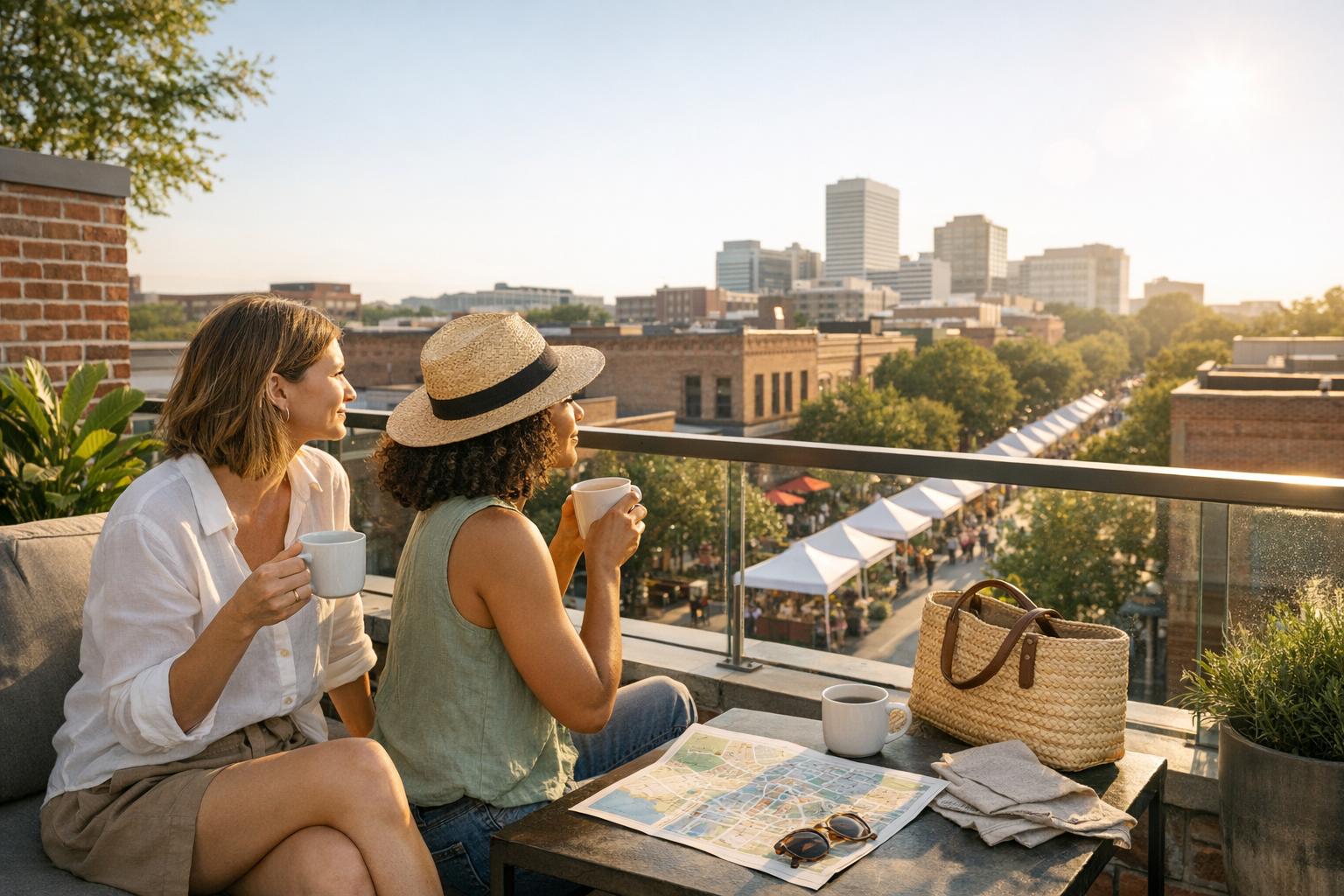
A good approach to a staycation: pick one main activity, set a spending limit, and keep work and chores off the schedule. These 45 ideas cover all four seasons, with estimated costs from $0 to $200+ and choices for quiet time, dates, friends, or family.
Here’s the full lineup:
- At home: Movie marathon; spa evening; digital detox; regional cooking challenge; backyard or balcony campout; board games and puzzles; destination-inspired reading retreat.
- Around town: Architecture walk; free museum or gallery day; public garden visit; farmers market breakfast; library reading day; public art tour; local history walk; volunteer day; transit neighborhood trip; historic house or lighthouse tour.
- Outside: Park picnic; seasonal nature walk; sunrise or sunset overlook; smartphone photography walk; lakeside picnic and swim; botanical garden visit; fall foliage drive; ice skating; beach day; state park hike; waterfall or viewpoint hike; rail-trail bike ride; pick-your-own farm visit; birdwatching trip.
- Food, classes, and nights out: Food crawl; brewery, winery, or cider tasting; cooking or baking class; pottery workshop; theater or concert; local sports game; amusement park day.
- Paid getaways close to home: Hotel pool pass; guided kayak or paddleboard trip; full-service spa day; luxury hotel night; boutique inn weekend; resort beach club pass; fine-dining tasting menu.
Start with budget, season, and mood, then check the total cost - including transportation, rentals, taxes, and tips. Before booking, confirm hours, access, and reservation rules. For outdoor plans, <u>I’d keep an indoor backup ready</u>.
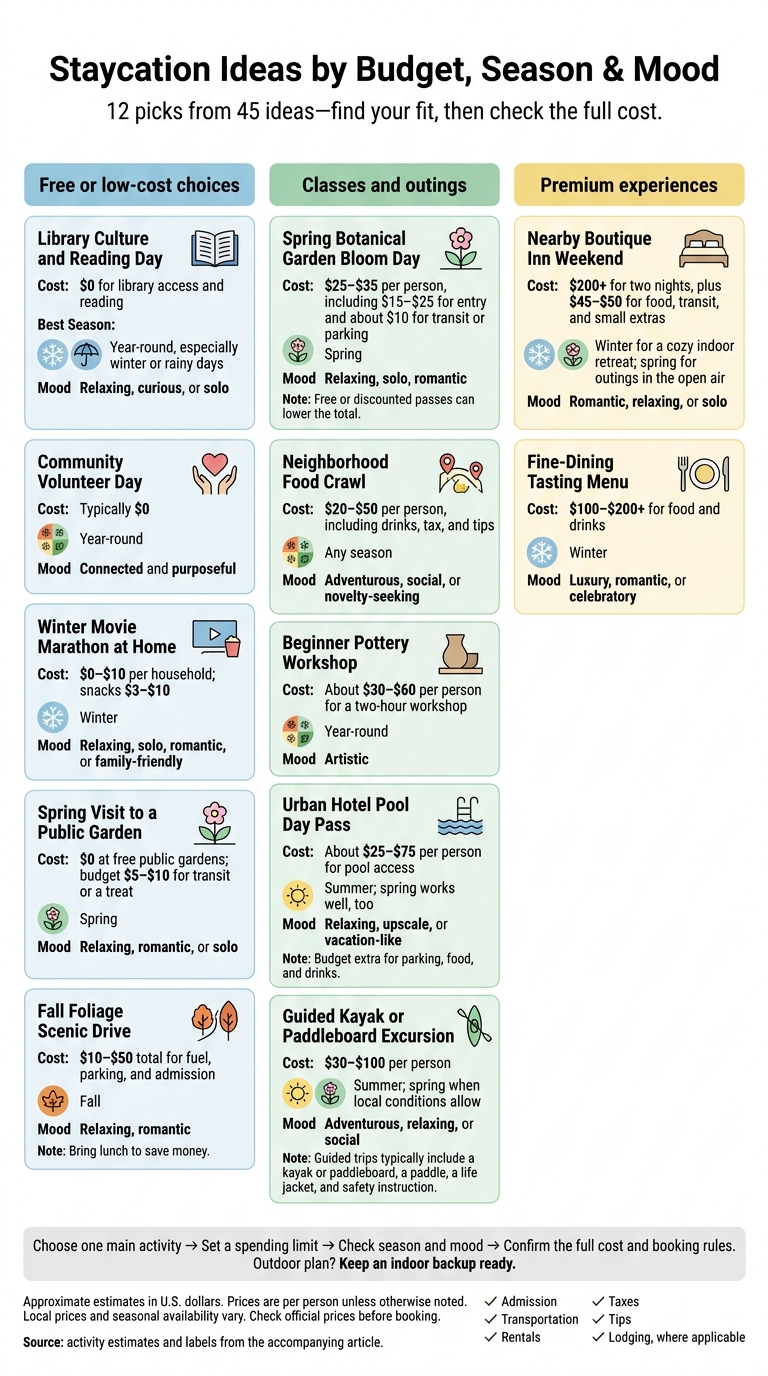
Staycation Ideas by Budget, Season & Mood
33 Fun Staycation Ideas Your Budget Will Love
sbb-itb-863a0bb
Find Your Staycation Fit
Before you choose an idea, use the budget, season, and mood labels to find what fits your day.
Cost labels: Free, under $25, $25–$75, $75–$200, and $200+. These are estimates, not fixed price brackets.
Local prices may put an activity in a different tier. Check official prices and your local library’s pass program before crossing an outing off your list.
Season labels: winter, spring, summer, fall, and year-round. Use these to plan your timing, and check seasonal availability. If you’re heading outdoors, have an indoor backup.
Mood labels: relaxing, adventurous, romantic, social, family-friendly, creative, or solo. An idea can fit more than one mood.
Start with your budget, then consider season and mood. The labels are guides, not rules. Choose one paid highlight and fill the rest of your day with free activities.
Plan a Local Escape Without Surprises
All costs below are approximate estimates in U.S. dollars. Prices are per person unless noted. Rates for couples, groups, households, and rooms are labeled separately.
Budget for admission, supplies, rentals, parking, transit, taxes, tips, and lodging. Keep optional extras separate. Only assume you already own gear or supplies when the idea says so. Otherwise, include the cost of renting or buying them.
Check the venue’s official website before booking a nearby outing. Confirm hours, reservation requirements, cancellation policies, accessible routes, and transit options. Check transit agency schedules for both the trip there and the return. Book popular outings early, then recheck conditions before leaving.
For national parks, check the National Park Service website for hours, fees, reservations, timed-entry rules, and alerts. Review road closures, wildlife notices, and fire restrictions, too. Entrance fees and timed-entry reservations are separate.
Plan outdoor outings around local conditions - not just the calendar. Bloom times, snow, foliage, and swimming seasons vary by region. Check the forecast, seasonal access, water quality, and rip current alerts. Then choose an idea below that fits your budget, season, and mood.
1. Winter Movie Marathon at Home
Cost: $0–$10 per household; snacks $3–$10. Best season: Winter. Mood: Relaxing, solo, romantic, or family-friendly.
Turn a simple movie night into an at-home staycation. Choose a film series or a lineup of winter classics. Print the schedule, set start and end times, and leave phones in another room so you can settle in without distractions.
Pile blankets and pillows on the couch for a cozy home cinema. Watch DVDs, stream your picks, or use free library resources. Make popcorn or microwave s’mores before the first film starts.
2. Self-Guided Neighborhood Architecture Walk
An architecture walk keeps costs and planning low. Cost: Free to about $20 with a café stop. Best season: Spring or fall. Mood: Curious and reflective - a good fit for solo travelers, couples, or friends.
Pick one walkable neighborhood near home. Find a self-guided architecture route on your city’s tourism site, then connect the landmarks with a free map. As you walk, look for facades, landmarks, and architectural styles you might otherwise pass without a second glance.
Check sidewalk accessibility and bus or rail access before heading out. Stay on sidewalks and respect residents’ privacy.
3. Picnic in a Neighborhood Park
Cost: $2–$15 if you pack food from home. Best season: Spring, summer evenings, or fall. Mood: Relaxing, romantic, social, or solo.
Pack homemade sandwiches or wraps, seasonal fruit, and snacks from your pantry. Bring a blanket, reusable water bottles, bug spray, and a cooler bag to keep chilled food cold.
Pick a park with shade, picnic tables, and open restrooms. Check the official parks site for amenities and closures before you go. After lunch, take a 30- to 45-minute walk to make the outing feel like a little escape.
4. Seasonal Nature Walk
Cost: Free; allow $2–$10 for parking or entry where required. Best season: Year-round. Mood: Relaxing or restorative.
Find a short trail near home through your city or county parks directory. Check its accessibility, then choose a route that suits the season.
Match the route to the season: flowering trees in spring, wildflowers in summer, colorful leaves in fall, or snowy scenery in winter.
Before heading out, check local bloom or foliage reports.
5. Free Museum or Gallery Day
A free museum or gallery day gives you an indoor change of pace without a big bill. Cost: $0 admission, plus about $10 for transit or parking. Best season: Year-round, especially winter or rainy days. Mood: Curious, solo, or romantic.
Check your library’s website for museum passes or the museum’s calendar for free-admission hours. Before heading out, confirm the hours, eligibility, reservation rules, and any proof-of-residency requirements. Library passes may be limited, so reserve ahead.
Choose one museum or gallery and spend the day there. Afterward, take a 20-minute neighborhood walk and stop at a café for $5–$15.
6. Spring Visit to a Public Garden
Trade some indoor time for a spring day at a public garden. Cost: $0 at free public gardens; budget $5–$10 for transit or a treat. Best season: Spring. Mood: Relaxing, romantic, or solo.
Find nearby gardens on your city or county parks website. Before heading out, check the bloom calendar and alerts - flowering times depend on local weather.
Pack water and a snack, silence your phone, and settle onto a bench to sketch or read. Have a nearby library or indoor café in mind as a backup if it rains.
7. Farmers Market Breakfast
Spend a slow morning at the farmers market with coffee and a bite to eat. Cost: $5–$8 for coffee and a light bite, or $10–$15 for breakfast from market vendors. Best season: Spring. Mood: Relaxing, social, or solo.
Head out early for the best selection. Before you leave, check the market’s official website for hours and prepared-food vendors. Keep spending in check by choosing one treat, or take home one seasonal ingredient and carry the staycation into your kitchen with breakfast at home.
8. Library Culture and Reading Day
For a quiet, low-cost break, grab a seat at a local library and settle in with a book. Browse a local-history display, or check the branch calendar for talks, film screenings, and workshops.
Cost: $0 for library access and reading. Best season: Year-round, especially winter or rainy days. Mood: Relaxing, curious, or solo.
Before you leave, borrow a book, magazine, or audiobook. If your schedule allows, stick around for a free branch program.
9. At-Home Spa Evening
Clear the bathroom counter, dim the lights, and put out clean towels. Start with a warm shower, then slip into a robe. Try some gentle stretching or use a face mask you already have.
Cost: $0 if you use existing supplies, or about $10–$25 for one or two extras, like a mask or special tea. Best season: Year-round, especially winter or for a spring reset. Mood: Relaxing, solo, or romantic.
Put your phone away for the evening. Wind down with tea and an early bedtime.
10. Screen-Free Digital Detox Day
Spend 24 hours without phones, tablets, computers, or television. Let work and family know ahead of time, tuck your devices into a drawer, and keep a paperback or sketchpad within reach.
Cost: $0 if you use supplies you already own, or about $10–$25 for a paperback or journal. Best season: Year-round. Mood: Calm, restorative, quiet. Add an offline walk or a quiet morning at a local park.
Need to stay reachable? Use Focus or Do Not Disturb to allow key contacts through, or keep your screen-free break to a few hours.
11. Sunrise or Sunset at a Local Overlook
For a short outdoor break, check local parks pages, tourism sites, or trail apps for a hilltop, beach, or rooftop overlook within 30 minutes of home. Check the forecast, posted hours, and parking rules before you go. Bring a blanket and snacks, and arrive before sunrise or sunset.
Choose an open overlook with clear access. If you’ll leave after dark, pack a flashlight and plan your route home.
Cost: Often free; budget about $10 for parking or transit, plus any small entry fee. Best season: Year-round, especially fall for foliage. Mood: Relaxing, romantic, solo.
12. Self-Guided Public Art Tour
A self-guided public art tour gives you another free, walkable outing. Start with an official public art or mural map from your city arts council, parks department, or transit agency. Plan a route through one mural district and add a sculpture stop. Check accessibility details before you go, and bring water from home.
Cost: Free; budget $5–$8 for coffee and about $10 for parking or transit. Best season: Spring or fall for a comfortable outdoor walk. Mood: Curious, artsy, solo, or social.
13. Regional Cuisine Cooking Challenge
Pick a dish from a region you’d like to taste, then spend an afternoon cooking it. Budget $8–$15 for the signature ingredient and use pantry staples for the rest. Leave enough time to enjoy the prep rather than rush through it.
Put your phone away, play a regional playlist, and set the table with your best dishes. Serve the meal in courses to make dinner feel like an event.
Cost: About $20–$50 total, depending on ingredients and portions. Best season: Year-round; winter is a good fit for slow-cooked comfort food. Mood: Inventive, solo, romantic, or social.
14. Backyard or Balcony Campout
Turn your backyard or balcony into a campsite before dinner using gear you already own. Pitch a tent in the yard or set out sleeping bags, blankets, and pillows on your balcony. Tell stories by flashlight, watch the stars, and make microwave s’mores. The next morning, have breakfast outside.
Check the forecast and building rules before setting up. If flames aren’t allowed, stick with microwave s’mores. If rain or storms roll in, move indoors and build a blanket fort.
Cost: About $5–$30 for snacks and basic supplies if you already own the gear. Best season: Summer, on a clear, warm night. Mood: Relaxing, romantic, or family fun.
15. Local History Walking Tour
See familiar streets in a new light with a local history walk. A history tour adds context to the scenery. Check your city’s tourism website or historical society for official maps and walking-tour schedules, then build your route around one historic building or monument.
Before heading out, check the distance, terrain, restroom locations, and accessibility. Bring a printed landmark map, too. Even a short route can change how you see your city.
Cost: Many self-guided routes are free; budget $10–$50 per person for transportation, admission, and a snack. Best season: Spring or summer. Mood: Educational, cultural, or curious.
16. Seasonal Smartphone Photography Walk
Make a 45-minute walk a photo hunt. Choose a seasonal theme - spring blossoms, summer waterfronts, fall leaves, or winter lights - and keep your route to five stops or fewer. Your phone is all you need. Look for light, color, and texture rather than landmarks.
Head out shortly after sunrise or before sunset for softer light. Mute notifications, test different angles, and choose one favorite photo to print or share.
Cost: $0 from home; budget $5–$15 for transit or parking. Best season: Year-round. Mood: Artistic, mindful, solo, or social.
17. Board-Game and Puzzle Afternoon
Turn your table into a board-game tournament for a cozy indoor break. Play for bragging rights or make a homemade trophy for the winner. For couples, a best-of-three match keeps things lively. Use games you own, borrow from the library, or swap with friends.
Bring out themed snacks or set up a living-room picnic. Spending the afternoon solo? Leave a puzzle in a quiet corner throughout your break so you can work on it in short sessions.
Cost: $0 with games or puzzles you already own; about $5–$25 for snacks or small prizes. Best season: Winter and rainy days. Mood: Playful and competitive, or restful when playing solo.
18. Community Volunteer Day
Give your staycation a sense of purpose by volunteering at a local food bank, animal shelter, or nonprofit. Look for one-time shifts on nonprofit websites and local volunteer calendars. If you don’t see details about sign-up, orientation, accessibility, or supplies, call ahead.
Cost: Typically $0. Best season: Year-round. Mood: Connected and purposeful.
19. Destination-Inspired Home Reading Retreat
Bring a little travel into a quiet afternoon with a novel, memoir, or travel book set somewhere you’d like to visit. Set aside a 3-hour block, settle into a reading nook, and get to know the destination through its pages. Turn off work notifications, put on regional music, and enjoy a destination-inspired snack as you read.
Cost: $0 with library books and pantry snacks; $10–$25 for themed treats. Best season: Winter. Mood: Solo and restful.
20. City Transit Neighborhood Adventure
Turn an everyday transit line into a low-cost mini day trip. Choose one bus or train route within about 30 minutes of home, then use official transit maps and city parks pages to plan one stop, one walk, and one coffee stop. It’s a small local escape without going far.
Before heading out, compare the price of a day pass with round-trip fares for your route. Check return schedules and accessibility, and choose a nearby library as your indoor backup.
Cost: About $2–$8 for transit, plus $5–$15 for an optional treat. Best season: Any, with an indoor backup. Mood: Curious, low-key adventurous.
21. Summer Lakeside Picnic and Swim
Pack a picnic and head to a local lakefront beach for lunch and a swim. Bring sunscreen, hats, bug spray, and a cooler.
Before you go, check the official parks website for water-quality advisories, lifeguard hours, parking fees, and reservation rules.
Cost: About $25–$45 total, including roughly $10 for parking or transit and $10 for picnic food. Best season: Summer. Mood: Relaxing, family-friendly.
22. Spring Botanical Garden Bloom Day
Spend a relaxed morning at a nearby botanical garden, taking in its plant collections and seasonal blooms. Check the garden’s bloom calendar or call the visitor center before you go.
Add a café stop, and keep a library visit as your rainy-day backup.
Cost: $25–$35 per person, including $15–$25 for entry and about $10 for transit or parking. Free or discounted passes can lower the total. Best season: Spring. Mood: Relaxing, solo, romantic.
23. Fall Foliage Scenic Drive
Plan a classic fall staycation with a half-day driving loop around one scenic overlook or state park within 30 minutes of home. Pack lunch and make time for a short walk.
Find routes through your local tourism office, then check foliage updates and road closures before heading out. Download your map ahead of time - peak fall color doesn’t last long. Keep the rest of the trip simple.
Cost: Plan on $10–$50 total for fuel, parking, and admission. Bring lunch to save money. Best season: Fall. Mood: Relaxing, romantic.
24. Winter Ice Skating and Hot Chocolate
Follow an ice-skating session with hot chocolate at a nearby bakery. It’s a cozy way to warm up afterward. Go midweek for fewer crowds.
Check the rink’s website for reservations, fees, and rules. If you’re skating outdoors, check for weather closures before leaving and wear extra layers.
Cost: Varies by rink; budget for admission, skate rental, and hot chocolate. Best season: Winter. Mood: Romantic, family-friendly, social.
25. Nearby Beach Day
Spend a day at a public beach swimming, walking along the shore, and enjoying a simple lunch. Check city, county, or state park websites for public-beach access. If you don’t drive, choose a beach you can reach on a single transit route.
Before heading out, check the weather, park alerts, swimming conditions, and closing times. Pack sunscreen, a hat, sunglasses, water, and nonperishable snacks so you can skip pricey concession stands.
Cost: Under $50. Plan for about $10 for parking or transit and $10 for picnic supplies, plus any entry fee.
Best season: Summer for a beach day; spring for coastal walks.
Mood: Relaxing, romantic, family-friendly, solo.
26. State Park Day Hike
A state park day hike gives you more room to unwind than a neighborhood walk. State parks usually offer longer marked trails, restrooms, and picnic areas.
Use the park’s official trail map to pick a marked trail, loop, or overlook that fits your fitness level and available time. Download the map before you leave.
Keep the drive to 30 minutes each way. Check whether you need a day-use reservation and whether your library lends a free state park vehicle pass.
Cost: Budget $5–$15 per vehicle for entry, plus fuel.
Best season: Spring blooms; fall foliage.
Mood: Adventurous, relaxing, wellness.
27. Waterfall or Scenic Viewpoint Hike
Give your hike a destination: a waterfall, an overlook, or both. Look for trails on your county parks website, then choose a distance and difficulty that fit your time and energy.
Bring water and snacks. Before swimming near a waterfall, check water-safety alerts. Have a museum or library in mind as a backup if the weather changes.
Cost: Often free; budget for parking or entry fees and transportation.
Best season: Spring for waterfall runoff; fall for foliage views.
Mood: Adventurous, wellness, solo.
28. Rail-Trail Bicycle Rental Day
Rent a bike near a trailhead and spend an active day riding a rail-trail. These former railroad routes are usually flat and beginner-friendly.
Before heading out, check city or county parks pages for a trail map. Find a nearby rental shop or bike-share station, then confirm the trail surface and bike availability.
Cost: About $2–$50 for bike rental or bike-share, depending on rental time and gear. Budget roughly $10 extra for parking or transit.
Best season: Spring, summer, or fall.
Mood: Active, adventurous, an escape into the open air.
29. Seasonal Pick-Your-Own Farm Visit
Spend a slow morning outdoors picking summer berries or fall apples at a local farm. Check daily crop availability before heading out. Harvest windows can close fast, and farms may pause picking while crops ripen.
Arrive early to beat the heat and crowds. Before you go, confirm hours, admission rules, reservation needs, accessibility, parking, and container requirements.
Cost: Budget $10–$50, depending on admission fees and how much produce you pick.
Best season: Summer for berries and flowers; fall for apples and pumpkins. Harvest dates vary by location.
Mood: Relaxed, social, family-friendly.
30. Wildlife Refuge Birdwatching Trip
Spend a quiet morning birdwatching at a nearby wildlife refuge. Look on county parks or state park websites for nature centers and guided bird walks. Choose an easy observation trail with clear accessibility details.
Pack water, sun protection, and bug spray. Before heading out, check refuge alerts, trail closures, and wildlife-viewing rules - including pet restrictions. Many refuges prohibit dogs to protect wildlife.
Cost: Free to under $50, depending on parking or entry fees.
Best season: Summer, with a morning visit
Mood: Peaceful, solo, or small-group.
31. Historic House or Lighthouse Tour
Spend half a day touring a preserved house or lighthouse, taking in period rooms, tower views, or coastal scenery. Find sites through your city’s tourism website, and check your library’s museum-pass program for free or discounted admission.
Before booking, confirm the tour length, seasonal hours, and accessibility. Planning to climb a lighthouse? Check the stair count first. If stairs are a problem, enjoy the grounds instead. Add a nearby café stop or waterfront walk to round out the outing.
Cost: Budget about $15–$25 per person for admission; some sites are free or donation-based.
Best season: Spring or summer, especially for gardens and coastal views.
Mood: Curious, romantic, solo, or relaxed.
32. Neighborhood Food Crawl
Skip the landmarks and plan your outing around food. Pick a theme - tacos, dumplings, or ice cream - and map 3–4 stops in one neighborhood within 30 minutes of home. Walk between stops, visit places you usually pass by, and share small plates to try more dishes.
Before heading out, check menus and whether you need reservations. If you have dietary restrictions, review menus online, then confirm ingredients with each restaurant. At each stop, take one photo and write a one-line note to give the outing a little more purpose.
Cost: Budget $20–$50 per person, including drinks, tax, and tips.
Best season: Any season.
Mood: Adventurous, social, or novelty-seeking.
33. Local Brewery, Winery, or Cider Tasting
Make a single tasting flight the main event of your afternoon. Then take a free walk in a nearby park to keep costs down.
Book ahead and check the hours before you head out. Confirm that mocktails or sparkling juice are available, and plan for a rideshare home.
Cost: Plan on about $25–$60 per person for a tasting flight and local rideshare. Check fares before committing.
Best season: Any season, with fall a good choice for cider tastings.
Mood: Social, romantic, or curious.
Want to stick with food and drinks? The next idea swaps tasting for hands-on cooking.
34. Hands-On Cooking or Baking Class
Go from tasting to making with about two hours of hands-on learning at a local culinary school, community center, specialty food shop, or neighborhood studio. Look for classes on city tourism pages or community-center calendars.
Before you book, check dietary accommodations and reservation requirements.
Classes can focus on sushi, bagels, pho, ramen, or carnitas.
Cost: About $30–$60 per person for a two-hour class; specialized workshops can cost under $100.
Best season: Year-round, especially winter or rainy spring days.
Mood: A chance to make something together, socialize, share a romantic outing, or try something adventurous.
35. Beginner Pottery Workshop
Book a beginner pottery session nearby for a hands-on break.
Cost: About $30–$60 per person for a two-hour workshop.
Best season: Year-round.
Mood: Artistic.
36. Live Theater or Concert Night
Book a community theater show or small concert for an easy evening out. Try a venue in a neighborhood you rarely visit. For a quieter crowd and lower prices, opt for a matinee instead.
Cost: About $20–$50 per person.
Best season: Summer for outdoor shows; winter for indoor performances.
Mood: Romantic, social, or solo.
37. Local Baseball, Basketball, or Soccer Game
Trade the stage for the stands for a louder, high-energy night out. Catch a local minor league, college, or high school game.
Cost: About $10–$50 per person for admission, transportation, and concessions.
Best season: Summer for baseball. For basketball and soccer, check local schedules.
Mood: Social, family-friendly, or solo.
38. Amusement Park Day
Spend the day at a nearby amusement park. Before heading out, check the park’s official website or app for operating hours, ride closures, height requirements, and safety guidelines.
Cost: Varies by park. Budget for admission, parking, and food.
Best season: Late spring or early fall offers milder weather. Visit Tuesday–Thursday for lighter crowds and lower prices.
Mood: Adventurous, social, or family-friendly.
39. Urban Hotel Pool Day Pass
Book a local hotel pool day pass for poolside downtime close to home - a small splurge that takes little planning. Before you book, check access hours, age limits, reservation requirements, and the weather cancellation policy.
Cost: About $25–$75 per person for pool access. Budget extra for parking, food, and drinks.
Best season: Summer is the main season, but spring works well, too. Pick a rooftop pool for sunset views or an indoor pool as a weather backup.
Mood: Relaxing, upscale, or vacation-like.
40. Guided Kayak or Paddleboard Excursion
Trade poolside downtime for a guided paddle on a calm lake or slow river. Find local guides through city or county parks department websites, and check the route length and exertion level before booking.
Cost: Plan to spend $30–$100 per person. Guided trips typically include a kayak or paddleboard, a paddle, a life jacket, and safety instruction.
Best season: Summer is the main season, though spring works well when local conditions allow. Check park alerts and swimming conditions before heading out.
Mood: Adventurous, relaxing, or social. For a slower pace and better views, choose a sunset paddle or eco-tour.
41. Full-Service Spa Day
If you're ready to splurge, book a full-service spa day at a nearby spa with a massage, facial, and manicure or pedicure. Before booking, check the hours, whether you need advance reservations, and access rules for amenities such as the fitness center or relaxation lounge.
Cost: Luxury splurge. Ask for a per-person total covering treatments, access, service charges, and tips. A basic 30-minute massage may start around $40.
Best season: Winter for a cozy indoor retreat, or spring for a seasonal reset.
Mood: Relaxing, solo, or romantic. Turn off notifications and enjoy some phone-free time.
42. Luxury Hotel Night in Your Own City
Book a night close to home and let the hotel room be the getaway. Request late checkout when you book so you can take your time the next morning. Midweek stays, especially Tuesday through Thursday, usually cost less.
Cost: Luxury splurge; rates vary. Budget for the room, taxes, parking, resort fees, dining, and gratuities - not just the advertised rate. Check AAA member rates and ask about packages with dining or parking credits.
Best season: Year-round.
Mood: Romantic getaway or restful solo retreat. Pick one splurge - room service, a drink at the bar, or dessert - and keep the rest simple.
43. Nearby Boutique Inn Weekend
For a longer splurge, swap one hotel night for a two-night stay at a small boutique inn within 30 minutes of home. Use your city or county tourism site to choose one main outing, and make the inn your base.
Consider a garden or museum.
Cost: $200+ for two nights, plus $45–$50 for food, transit, and small extras. Set a firm total spending cap before booking.
Best season: Winter for a cozy indoor retreat; spring for outings in the open air.
Mood: Romantic, relaxing, or solo. Keep the weekend work-free.
44. Resort Beach Club Day Pass
Treat yourself to a day at a nearby resort beach club, with pool and shore access without an overnight stay. Check the resort’s official website several weeks ahead for non-guest access and reservation requirements. Confirm age limits directly with the resort.
Cost: A splurge, with prices varying by property. Read the pass details and weather cancellation terms before paying, especially if the booking is nonrefundable.
Best season: Summer. Keep an indoor backup plan for storms or extreme heat.
Mood: Relaxing, romantic, or social. Put your phone away and enjoy a screen-free break.
45. Fine-Dining Tasting Menu
Plan your day off around a tasting menu at a local restaurant.
Cost: $100–$200+ for food and drinks. Confirm your reservation and check the details on the restaurant’s official website.
Best season: Winter.
Mood: Luxury, romantic, or celebratory.
Leave the next morning free to take it slow, then use the tips below to make your staycation feel like a proper break.
Make Your Time Off Feel Like a Real Break
Pick one idea above that fits your mood, time, and budget. Make it your main activity, and leave part of the day open.
Let the cost labels above guide you: one free or midrange outing - or one splurge - can be enough for the day.
Set boundaries before your time off starts. Decide what you’ll do and what you’ll skip so your staycation doesn’t turn into another chore day.
For outdoor plans, have an indoor backup with compatible hours, reservation rules, and cost. That way, a weather change won’t leave you planning from scratch.
Before booking, check the total cost, parking or transit options, equipment rental, reservations, accessibility, and any pass or lodging rules. A few checks now can save you hassle later.
FAQs
How can I plan a weeklong staycation on a budget?
Set a spending cap before the week starts. A typical weeklong staycation costs $150–$300. Free library passes, public parks, and things you already own can help you spend less.
Request formal time off, and set clear limits on work and chores. Plan one or two meaningful activities each day so you don’t burn yourself out. Leave room in your budget for one or two splurges - a nice meal or an attraction ticket - and keep the other days low-cost.
How can I balance family fun with downtime?
Leave room in your day. Choose one meaningful activity and keep the rest of the schedule open. For family activities, set up three stations: a craft, an active challenge, and a calm finish to help balance everyone’s energy.
Protect downtime by turning off work notifications and setting “no-phone” windows. Have a backup activity ready in case the weather or energy levels change. Keep meals simple so they don’t turn into another chore.
What staycation ideas work in a small apartment?
Bring the vacation mood indoors with setups that take up little space. Start by clearing and organizing one area. Then plan a themed movie marathon with blankets and snacks, build a blanket fort, or set up a DIY puzzle station.
You could also host an indoor picnic, turn a small spot into a café, or enjoy an at-home spa reset with towels, a bath or shower, stretching, or a face mask.
To keep the day budget-friendly, choose one main activity and keep everything else simple and nearby.