Choosing the right place to stay can make or break your staycation. Here’s the bottom line:
- Hotels are best for short stays, solo travelers, or couples who want convenience, daily housekeeping, and central locations. Downsides include limited space and extra fees for parking or pets.
- Resorts offer a full-service experience with amenities like pools, spas, and on-site dining. They’re great for families or couples looking for relaxation but come with higher costs and mandatory resort fees.
- Vacation Rentals provide the most space and privacy, ideal for families, groups, or longer stays. They save money on meals with kitchens but require more planning and often include cleaning fees.
Quick Comparison
| Feature | Hotels | Resorts | Vacation Rentals |
|---|---|---|---|
| Space | ~325 sq ft | Varies | 1,000–2,000 sq ft |
| Kitchen | None/mini-fridge | Kitchenettes common | Fully equipped |
| Privacy | Shared spaces | Shared amenities | Entire home/private |
| Pet-Friendly | 10% of properties | Varies | 60% of properties |
| Best For | Short stays, couples | Relaxation, families | Groups, longer stays |
Hotels are simple and hassle-free. Resorts focus on entertainment and amenities. Vacation rentals give you space and flexibility. Choose based on your trip length, group size, and priorities.
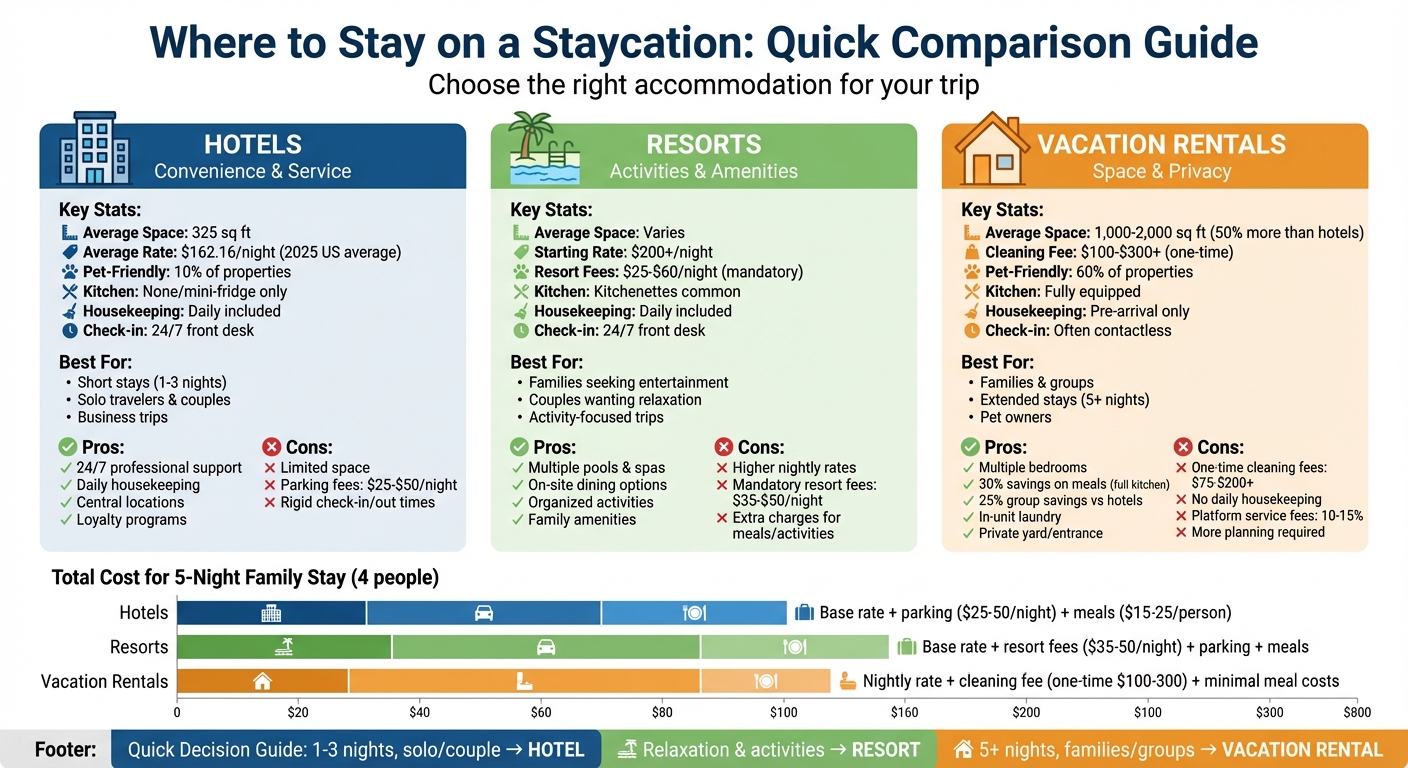
Hotels vs Resorts vs Vacation Rentals: Complete Comparison Guide
Hotel or vacation rental? What's the best bargain for your next trip?
sbb-itb-863a0bb
Hotels: Quick and Easy Stays
Hotels are all about convenience. You check in, get your key, and let the staff handle the rest - cleaning, fresh linens, and even room service if you want it. No need to worry about cooking or tidying up, and with staff available 24/7, even late-night issues can be resolved quickly. This service-focused setup makes hotels a popular choice for travelers looking for simplicity. Let’s dive into what hotels bring to the table and when they’re the perfect choice for your stay.
What Hotels Offer
Hotels provide a consistent experience with professional management and high standards of cleanliness. Expect 24/7 front desk service, daily housekeeping, and dining options that range from breakfast buffets to full-service restaurants or room service. Many hotels also offer extras like fitness centers, pools, and business facilities - all in one location. Plus, hotels are often situated in prime spots, like city centers, business districts, or close to popular attractions and public transit.
"Guests will choose hotels over vacation rentals when they value services such as daily housekeeping, on-site dining, 24/7 front desk support and guaranteed cleanliness standards." – Lighthouse
Hotel rooms average around 325 square feet, giving you a compact but functional space. While you won’t find a kitchen or separate living area, you also won’t have to worry about cooking or cleaning. For frequent travelers, loyalty programs sweeten the deal with perks like upgrades, discounts, and other exclusive benefits that vacation rentals rarely offer.
Hotels: Advantages and Disadvantages
| Advantages | Disadvantages |
|---|---|
| 24/7 professional support and concierge services | Limited space (~325 sq. ft.) with no separate living areas |
| Daily housekeeping and room service | Extra fees for parking, cribs, rollaway beds, and pets |
| Central locations near attractions and transit | Rigid check-in/check-out times |
| On-site dining eliminates meal planning | Only 10% are pet-friendly |
| Loyalty programs for discounts and upgrades | Shared common areas can feel crowded during peak times |
Hotels are ideal for travelers who want everything taken care of. However, they come with some trade-offs. Limited space and flexibility can be a downside, especially for families or longer stays. And if you’re traveling with pets, your options narrow significantly - only 10% of hotels allow pets, compared to 60% of vacation rentals.
When to Choose a Hotel
Hotels are perfect for short stays, especially when convenience outweighs the need for extra space. Solo travelers and couples often appreciate the security of 24/7 staff and the social atmosphere of hotel bars and lounges. Business travelers benefit from central locations and meeting facilities. For a weekend getaway where you’d rather explore the city than worry about cooking or cleaning, a hotel is a great choice.
That said, if you’re planning a longer trip or traveling with family, the limited space and lack of kitchen facilities might feel restrictive. But for a quick, hassle-free stay where all the details are handled for you, hotels are tough to beat.
Resorts: Full-Service Getaways
Resorts transform your trip into a complete vacation experience. Rather than just being a place to sleep, they provide a self-contained environment packed with amenities like pools, spas, on-site dining, and entertainment. Everything is designed to help you relax without the hassle of planning every detail.
What Resorts Offer
When you arrive at a resort, you’re stepping into a world of convenience and entertainment. Many feature multiple pools, luxurious spas, and fitness centers equipped with top-tier gear. Dining options are often plentiful, with restaurants offering a variety of cuisines right on-site. Families are well-catered to with attractions like water parks, lazy rivers, and arcade rooms. Resorts also organize activities like cooking classes or seasonal events to make your stay even more memorable.
One thing that sets resorts apart is their ability to combine practical amenities with unexpected experiences. Jordan Hollander, CEO of HotelTechReport, puts it well: "Today's guests crave novelty and utility. They want to be surprised with hotel amenities that they'll actually use". Resorts deliver on this with unique offerings - think champagne sabering ceremonies or personalized outdoor adventures. For instance, Montage Deer Valley has a Bernese Mountain Dog acting as a "canine ambassador" to welcome guests.
Location-specific recreation is another hallmark of resorts. Whether it’s beachfront access, ski slopes, or lakeside activities, these properties often tie their offerings to their surroundings. To truly qualify as a resort, a property usually includes more than just lodging and dining - expect extras like private beaches, on-site golf courses, or ski-in/ski-out convenience.
Resorts: Advantages and Disadvantages
| Advantages | Disadvantages |
|---|---|
| Self-contained experience with dining, activities, and entertainment on-site | Higher nightly rates, often starting at $200+ per night |
| Specialized recreation options like spas, golf courses, and water parks | Daily resort fees ($25–$60) can add up |
| Family-friendly amenities such as lazy rivers and arcade rooms | Extra charges for meals, drinks, and select activities |
| Pre-planned activities simplify your trip | Limited chances to explore local attractions and dining |
While resorts offer a seamless, all-in-one experience, this convenience often comes at a premium. Between higher nightly rates and additional fees, costs can escalate quickly.
When to Choose a Resort
Resorts are perfect for those who want to unwind without worrying about logistics. They’re a great pick for families seeking on-site entertainment or couples craving a romantic, stress-free getaway. As AAA Travel Editor Katie Broome puts it, "If you've ever needed a reason to sit by the pool all day or relax in a comfy hotel bed with no other plans, a staycation [at a resort] may be just the ticket".
They’re also ideal for anyone looking to unplug and recharge with outdoor activities. Many upscale resorts even welcome pets, so you don’t have to leave your furry friend behind. Unique destinations like FivePine Lodge & Spa in Oregon or Vista Verde Guest Ranch in Colorado provide a premium escape from typical accommodations.
For the best value, try booking during the shoulder season when rates are lower but amenities are fully available. Look out for package deals that include resort credits for dining, spa treatments, or golf. And if you’re on a tighter budget, some resorts offer day passes, giving you access to pools and other facilities without booking an overnight stay.
Vacation Rentals: Room to Spread Out
Vacation rentals stand out by offering a home-away-from-home experience with plenty of space to stretch out. Unlike cramped hotel rooms or the all-in-one setup of resorts, these properties give you access to an entire house or condo. That means separate bedrooms, a full kitchen, and often perks like a private yard or pool. To put it into perspective, you're trading the typical 325 square feet of a hotel room for 1,000 to 2,000 square feet of living space.
What Vacation Rentals Offer
On average, vacation rentals provide 50% more room than standard hotel accommodations. They come with multiple bedrooms, a fully equipped kitchen, in-unit laundry, and private outdoor areas such as patios or fenced yards.
The kitchen alone can transform your trip. Brew your morning coffee at your own pace, whip up breakfast without rushing, or enjoy grilling dinner whenever it suits you. For families, having separate living spaces means you can enjoy time together while still having privacy when needed. As the Operations Manager at bnbme holiday homes explains, "Vacation rentals offer better value, enhanced comfort, authentic experiences, and customizable options. They are ideal for families, groups, and extended stays".
Location is another plus. Many rentals are located in peaceful residential neighborhoods or cul-de-sacs, far from the hustle and bustle of tourist areas. This not only enhances sleep quality but also provides a more local and relaxed experience.
Vacation Rentals: Advantages and Disadvantages
| Advantages | Disadvantages |
|---|---|
| Multiple bedrooms and 50% more space than hotels | One-time cleaning fees ($75–$200+) add to total cost |
| Full kitchen saves 30% on meal expenses | No daily housekeeping or front desk service |
| In-unit laundry and home amenities | More planning required for meals and activities |
| 25% group savings compared to hotel rooms | Platform service fees can be 10–15% of booking total |
| 60% are pet-friendly (vs. 10% of hotels) | Better value only for stays of 3+ nights due to fixed fees |
| Private entrances and yards for total privacy | Rules vary by property and HOA |
While the base nightly rate for a vacation rental might seem higher than a hotel, the savings can add up. Families typically save around 30% on food expenses by cooking meals, and groups report approximately 25% savings overall compared to booking multiple hotel rooms. Just remember to include cleaning fees and service charges when calculating the final cost.
When to Choose a Vacation Rental
Vacation rentals are ideal for family trips, group getaways, or longer stays. They shine when you're traveling with multiple generations, offering enough bedrooms for everyone while still providing shared spaces to come together. A 2023 survey found that 85% of guests picked vacation rentals specifically for the extra space and privacy.
They’re also a great choice for pet owners, with 60% of rentals being pet-friendly. If you're planning a staycation, having your own kitchen and laundry facilities lets you set your own schedule and truly relax.
For the best deals, aim to book 3 to 6 months in advance for peak travel seasons like spring break or summer. Always calculate the total cost - including cleaning fees, service charges, and any extras like pool heating - before comparing prices with hotels. For multi-generational trips, look for properties with main-level king suites and minimal stairs for easier accessibility. And if you’re planning to grill, confirm whether the property has a private gas grill, as some condo balconies prohibit grilling.
Next, we’ll explore how hotels, resorts, and vacation rentals compare when put side by side.
Side-by-Side Comparison: Hotels vs Resorts vs Vacation Rentals
When planning a staycation, knowing the differences between hotels, resorts, and vacation rentals can help you choose the perfect fit for your trip. Below is a breakdown of how these three accommodation types compare, highlighting their unique features. Take a look at the table for a quick overview before diving into the finer details of costs and amenities.
| Feature | Hotels | Resorts | Vacation Rentals |
|---|---|---|---|
| Primary Focus | Convenience & Service | Activities & Amenities | Space & Privacy |
| Average Space | 325 sq ft | Varies | 1,000–2,000 sq ft |
| Housekeeping | Daily included | Daily included | Usually none (mid-stay for a fee) |
| Kitchen | None or mini-fridge | Kitchenettes common | Fully equipped kitchen |
| Laundry | Paid valet/dry cleaning | On-site guest laundry | In-unit washer/dryer |
| Check-in | 24/7 front desk | 24/7 front desk | Often contactless/keyless |
| Common Fees | Parking, urban fees | Mandatory resort fees ($25–$100+/night) | Cleaning & booking fees |
| Privacy | Shared hallways/lobbies | Shared public spaces | High (entire home/private yard) |
| Pet-Friendly | 10% of properties | Varies | 60% of properties |
| Best For | Solo travelers, couples, short stays | Activity-focused trips, all-inclusive relaxation | Families, large groups, extended stays |
This side-by-side comparison highlights how each option caters to different priorities. Hotels are all about convenience and service, making them ideal for quick trips or solo travelers. Resorts lean into activities and amenities, perfect for those seeking relaxation or adventure. Vacation rentals, on the other hand, offer plenty of space and privacy, making them a go-to choice for families or extended stays.
"Hotels excel in delivering seamless, service-driven stays, whereas vacation rentals focus on privacy and a unique, personalized connection to the destination." - Lighthouse
Choose the option that best aligns with your travel style and priorities.
What Each Option Costs
When deciding where to stay, it’s important to think beyond just the nightly rate. Different types of accommodations structure their pricing in unique ways, and what looks like a deal upfront can quickly balloon once you factor in all the additional fees.
Hotels are often straightforward when it comes to nightly rates - what you see is close to what you get. In 2025, the average hotel rate in the U.S. is $162.16 per night. For short trips, like a weekend getaway, hotels tend to be the most budget-friendly choice. Their simplicity, with no large one-time fees, makes them a go-to for solo travelers or couples looking to keep costs predictable.
Resorts, on the other hand, tack on mandatory resort fees that can add $35 to $50 per night to your bill. These fees typically cover amenities like WiFi, pool access, and gym use - things you might assume are included. For longer stays, these extra charges can add up quickly, making resorts a pricier option.
Vacation rentals use a completely different pricing model. Instead of daily fees, you'll encounter a one-time cleaning fee that ranges from $100 to $300 or more, plus platform service fees. While the nightly rates for rentals might be comparable to hotels - or even higher - the cleaning fee remains fixed, making longer stays more economical. Rentals are especially cost-effective for groups, as multiple bedrooms can be shared, spreading out the costs.
"For groups and week-long stays, rentals often win on cost per bedroom and dining savings. For short stays, hotels can be simpler and cheaper." - Destin Dreamers
Extra Fees to Expect
Hidden fees can make a big difference in your final bill. The advertised price is rarely the full story, and each accommodation type comes with its own set of additional charges.
Hotels and resorts often include fees that aren’t immediately obvious. Parking can cost $25 to $50 per night in popular locations, and resort fees add another $35 to $50 per night. If you’re traveling with family, breakfast charges of $15 to $25 per person can quickly inflate the total. A February 2026 analysis found that while a set of four hotel rooms had a base rate $6,720 lower than a vacation rental, the added fees exceeded $2,000, significantly narrowing the price gap.
Vacation rentals, while simpler in some ways, have their own quirks. Parking is usually free since most rentals come with a driveway or private spot, and there are no daily resort fees. However, some rentals charge for optional extras like pool heating, which can add a daily cost during cooler months. The ability to cook meals in a full kitchen also means fewer meal-related expenses compared to hotels.
| Fee Type | Hotels/Resorts | Vacation Rentals |
|---|---|---|
| Cleaning | Included in base rate | One-time fee ($100–$300+) |
| Parking | $25–$50 per night | Usually free |
| Breakfast/Meals | $15–$25 per person | Low (full kitchen access) |
| Resort Fees | $35–$50 per night | Included or specific add-ons |
| Housekeeping | Daily service included | Pre-arrival only; mid-stay extra |
When comparing options, don’t just focus on the nightly rate. Make sure to calculate the full cost, including resort fees, cleaning fees, parking, and any other platform service charges. It’s also worth asking hotels about hidden fees like valet charges or destination fees that might not appear in the initial quote.
Best Value by Trip Length
The length of your stay can completely shift which option offers the best value for your money.
For short stays of 1–3 nights, hotels are typically the better choice. With no hefty cleaning fees and the convenience of daily housekeeping, hotels are ideal for solo travelers or couples on a quick weekend trip. Business travelers also benefit from perks like loyalty points and corporate discounts, which can stretch their budget further.
For stays lasting 5+ nights, especially with families or groups, vacation rentals often come out ahead. The cleaning fee becomes less of a burden when spread across more nights, and having a kitchen allows you to prepare meals instead of eating out. Families can save an average of 30% on food costs by cooking just one meal per day, and groups staying in vacation rentals report an average of 25% savings compared to booking multiple hotel rooms. For example, a family of five staying a week will almost always spend less in a rental than in the two hotel rooms they’d need, even before factoring in meal savings.
Large groups see the biggest cost advantage with vacation rentals. A home that sleeps 12 people might cost $2,000–$3,000 per night, breaking down to $167–$250 per person - far cheaper than booking four hotel rooms at $162+ per room, plus individual resort fees and parking charges. The shared spaces, full kitchen, and included parking make rentals an obvious choice for group trips.
"A $2,400 home split twelve ways comes out to about $200 per person per night, while a '$180 hotel room' can quickly turn into four to six rooms before resort fees, parking, and daily breakfasts even enter the picture." - AvantStay
When planning, calculate the per-person cost instead of just looking at the total nightly rate. For larger groups, vacation rentals simplify the costs and eliminate many of the extra fees that can pile up with hotels. Matching your choice of accommodation to your trip length and group size can make all the difference in sticking to your budget.
How to Choose the Right Accommodation
When deciding where to stay, think about trip length, group size, and your personal priorities. These factors can help you find the perfect match between convenience, cost, and comfort.
For a quick weekend getaway, especially for solo travelers or couples, hotels are often the most practical choice. You get perks like daily housekeeping, round-the-clock front desk support, and a straightforward booking experience without hidden fees. Business travelers and frequent flyers also appreciate loyalty programs that offer perks like free upgrades and discounts for repeat stays. Hotels are ideal if you value convenience and minimal hassle during shorter trips.
If you're traveling with family or a larger group and planning to stay four nights or more, vacation rentals might be the smarter option. They provide more space than hotels, and having a full kitchen can significantly reduce meal costs - families often save about 30% by cooking their own meals. Groups also find vacation rentals more cost-effective compared to booking multiple hotel rooms, as they get privacy and ample room to spread out.
"For most families and groups, a Destin vacation rental wins on space, kitchens, privacy, and total cost per bedroom. For short stays or solo/couple trips, a hotel can win on daily housekeeping, on‑site dining, and loyalty points." - Destin Dreamers
Resorts, on the other hand, are a great choice if you're after a full-service experience. With amenities like spas, pools, and on-site entertainment, they offer a one-stop destination for relaxation and fun. However, keep in mind that some of these extras may come with additional fees.
When comparing options, it’s essential to look beyond the nightly rate. Calculate the total cost per person, considering factors like cleaning fees, resort fees, parking, and meal expenses. By aligning your accommodation with your trip’s priorities - whether it’s ease, space, or budget - you can enjoy a stay that fits your needs perfectly.
FAQs
How do I compare total cost, not just the nightly rate?
When comparing total costs, don’t just focus on the nightly rate. Be sure to factor in taxes, fees, service charges, and any additional costs for amenities or activities. Sometimes, packages or all-inclusive deals can provide better value, so it’s worth exploring those options. By considering the overall price, you’ll avoid surprises from hidden costs that could throw off your budget.
Which option is best if I’m traveling with kids or a larger group?
Hotels, resorts, and vacation rentals each bring something different to the table, especially for families or larger groups. Hotels and resorts often come packed with perks like pools, activity programs, and on-site dining options, making them super convenient and fun for everyone. On the other hand, vacation rentals offer more space and a cozy, home-like vibe, which can be perfect for longer stays or group gatherings. The right pick really comes down to what you value most - space, amenities, or convenience.
What fees should I watch for before I book?
When booking accommodations, keep an eye out for booking fees, which typically range from $5 to $20. These fees are often added at checkout by hotels or online travel agencies to cover administrative or platform costs.
If you're considering vacation rentals, stay vigilant against potential scams. Make sure the booking platform offers solid protections, like verified listings and secure payment options. Lastly, always take a moment to review the fine print to steer clear of any surprise charges.