Choose one Virginia destination that fits your plans - and your drive time. For a short weekend, stay close to home; allow 2–3 nights for a mountain trip.
Here’s where to go:
- Virginia Beach: Boardwalk activity, ocean beaches, and family outings.
- Cape Charles: Calm bay water, sunset views, and a slower pace.
- Charlottesville: Vineyard visits, historic sites, and downtown dining.
- Loudoun County: Winery clusters and small-town stays near Northern Virginia.
- Shenandoah National Park: Summit hikes, waterfalls, and Skyline Drive.
- Virginia’s Blue Ridge: Cabins, Parkway drives, and mountain-town stops.
Quick Comparison
| Trip style | Destinations | Main draw | Plan ahead for |
|---|---|---|---|
| Beach | Virginia Beach, Cape Charles | Swimming and waterfront stays | Summer lodging, parking, tolls, and water conditions |
| Wine country | Charlottesville, Loudoun County | Tastings, dining, and town visits | Reservations and a designated driver |
| Mountains | Shenandoah, Virginia’s Blue Ridge | Hiking, scenic drives, and cabins | Fall lodging, park fees, and road closures |
<u>Check current conditions before booking.</u> October brings foliage traffic, while winter can limit mountain-road access. Treat listed prices as estimates, and budget for transportation, meals, and activities - not just your room.
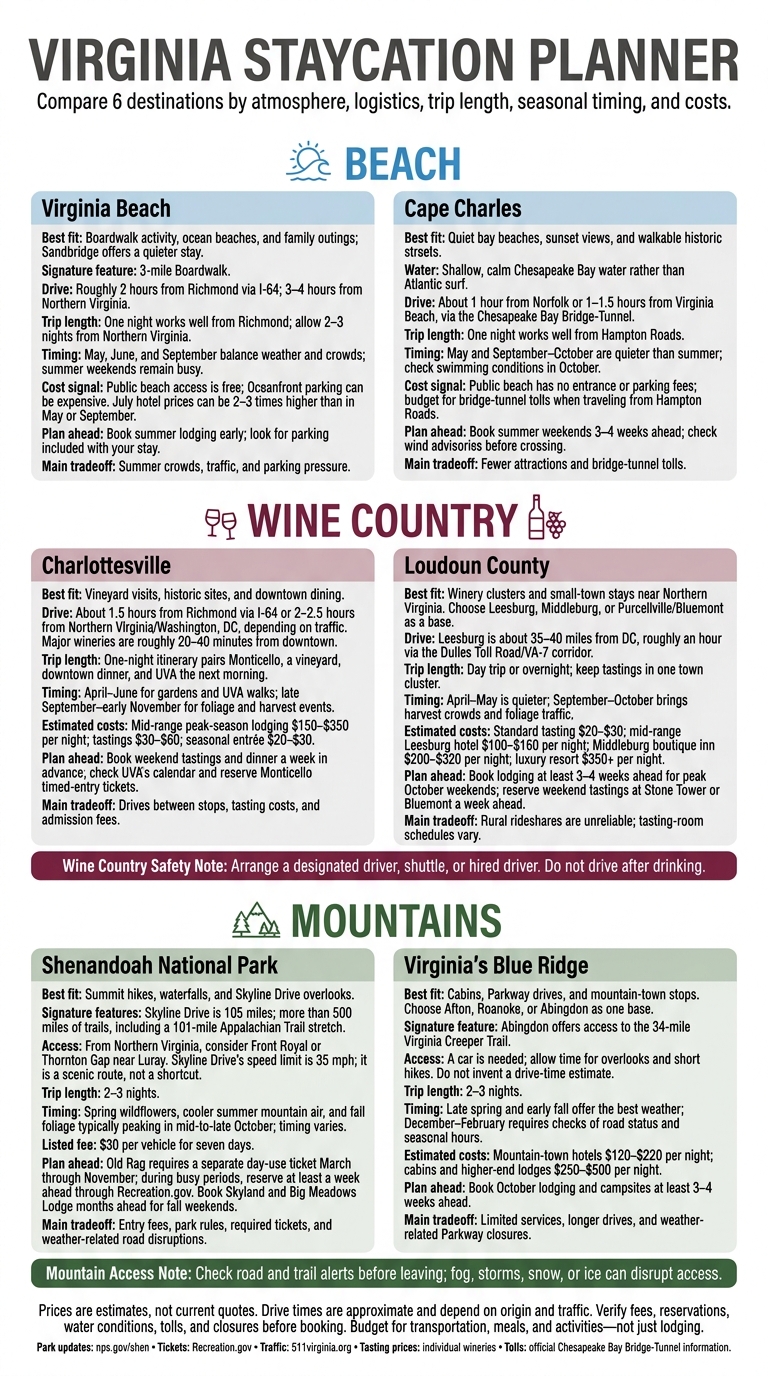
Virginia Staycations: Compare 6 Beach, Wine & Mountain Escapes
1. Virginia Beach
Activities and atmosphere
The 3-mile Boardwalk keeps bike rentals, Neptune’s Park, summer music, and family rides close by. Stop at Waterman’s Surfside Grille for seafood near the Oceanfront. For a quieter stay, head south to Sandbridge.
Sandbridge sits near the marshes and trails of Back Bay National Wildlife Refuge. Expect to drive to get around, and choose Chesapeake Bay or Back Bay for paddling and wildlife watching.
Driving and trip length
Virginia Beach is roughly 2 hours from Richmond via I-64 and 3–4 hours from Northern Virginia. A one-night trip works well from Richmond; allow 2–3 nights from Northern Virginia. It’s a good fit for a short weekend packed with activities.
Seasonal conditions
May, June, and September offer a balance of weather and crowds, though summer weekends are still busy. Oceanfront surf suits active swimmers, while the calmer Chesapeake Bay beaches at First Landing State Park are better for children.
Costs and reservations
Public beach access is free, but Oceanfront parking can be expensive and difficult to find. Book summer lodging early, look for a stay that includes parking, and use the seasonal VB Wave trolley along Atlantic Avenue. July hotel prices can be 2–3 times higher than in May or September.
For a quieter coastal stay, Cape Charles offers a slower-paced bayfront alternative.
sbb-itb-863a0bb
2. Cape Charles
Activities and atmosphere
Cape Charles offers a quieter bayfront stay when Virginia Beach feels too busy. Walk its Victorian streets, bike through downtown, rent a kayak from Poseidon Watersports, or fish from the town pier. The west-facing beach gives you Chesapeake Bay sunset views. Stop at The Shanty for waterfront seafood and Cape Charles Coastal Baking Co. for breakfast.
Driving and trip length
From Hampton Roads, take the Chesapeake Bay Bridge-Tunnel to Cape Charles. Allow about 1 hour from Norfolk or 1–1.5 hours from Virginia Beach. One night works well for this trip. Check wind advisories before crossing.
Seasonal conditions
May and September–October are quieter than summer. September usually has the warmest shoulder-season water; check water conditions before swimming in October. Cape Charles has shallow, calm bay water rather than Atlantic surf, making it a good spot for swimming and paddling.
Costs and reservations
The public beach has no entrance or parking fees. Plan for lodging, meals, rentals, and bridge-tunnel tolls. Round trips completed within 24 hours may qualify for a discounted return toll, so check the current terms before booking.
Book summer weekends 3–4 weeks ahead. Reserve summer kayak rentals early. During quieter months, confirm restaurant hours before deciding where to eat.
For inland tastings and historic towns, compare Charlottesville and Loudoun County next.
3. Charlottesville
Activities and atmosphere
Pair visits to Monticello, UVA, and the Downtown Mall with a vineyard stop at King Family, Veritas, or Early Mountain. For time away from wine tastings, browse bookstores, stop at cafés, or visit Jefferson Theater. Back in town, look for farm-to-table menus featuring local produce and dairy.
Driving and trip length
Allow about 1.5 hours from Richmond via I-64 or 2–2.5 hours from Northern Virginia/Washington, DC, depending on traffic. Major wineries sit roughly 20–40 minutes from downtown.
For a one-night stay, tour Monticello in the morning, visit a vineyard in the afternoon, and have dinner downtown. Save UVA for the next morning. For tastings, arrange a driver, wine tour, or rideshare; do not drive after drinking.
Seasonal conditions
April–June is a good time for garden tours and walks around UVA. Late September–early November brings fall foliage and harvest events in the foothills. Check UVA’s calendar before booking: move-in, parents’ weekends, and major games can push hotel prices up and leave fewer rooms available.
Costs and reservations
Plan on roughly $150–$350 per night for mid-range lodging during peak season, $30–$60 per tasting, and $20–$30 for a seasonal entrée. Budget separately for Monticello admission, check current prices, and reserve timed-entry tickets ahead. Book weekend tastings and dinner a week in advance.
For a wine-country base closer to Northern Virginia, compare Loudoun County next.
4. Loudoun County
Activities and atmosphere
Choose Leesburg for a walkable downtown, Middleburg for horse-country inns, or Purcellville/Bluemont for winery clusters and foothill views. Pick one town cluster, then plan your tastings nearby.
Driving and trip length
Loudoun suits short wine getaways from Washington, DC, and Northern Virginia. Leesburg is about 35–40 miles from DC, roughly an hour’s drive via the Dulles Toll Road/VA-7 corridor. Take Route 50 to reach Middleburg.
For a day trip, keep tastings in one area to spend less time driving. Staying overnight? Base yourself in Leesburg, where you can have dinner close to your lodging, then visit the historic village of Waterford the next morning.
Seasonal conditions
April–May is quieter, while September–October brings harvest crowds and fall foliage traffic. Book lodging at least 3–4 weeks ahead for peak October weekends.
Costs and reservations
Budget about $20–$30 per standard tasting. Nightly lodging runs roughly $100–$160 for a mid-range Leesburg hotel, $200–$320 for a Middleburg boutique inn, and $350+ for a luxury resort such as Salamander. Reserve weekend tastings at Stone Tower or Bluemont a week ahead.
Use a designated driver, winery shuttle, or hired driver. Rural rideshares are unreliable.
For a change from wineries and small-town strolls, the Shenandoah and Blue Ridge sections focus on trails and scenic drives.
5. Shenandoah National Park
Activities and atmosphere
Skyline Drive runs 105 miles, with overlooks along the way. The park also has more than 500 miles of trails, including a 101-mile stretch of the Appalachian Trail. Head to Stony Man for sweeping mountain views, Hawksbill for the park’s highest peak, or Dark Hollow Falls for a waterfall hike. Near Big Meadows, watch for deer and black bears. For an easier forest loop, try the Limberlost Trail.
Driving and trip length
Plan 2–3 nights to see more than a day trip allows. From Northern Virginia, Front Royal or Thornton Gap near Luray are the best entrance options for a short visit. Spend one day at overlooks and another hiking to a summit or waterfall.
Skyline Drive’s speed limit is 35 mph, so treat it as a scenic route - not a shortcut. The Blue Ridge Parkway begins at the park’s southern end.
Seasonal conditions
Spring brings wildflowers, while summer offers cooler mountain air along with afternoon storms. Fall foliage typically peaks in mid-to-late October, though the timing varies.
Start popular hikes before 7:00 a.m. for easier parking and cooler conditions. Carry at least 2 liters of water (about 68 fluid ounces) on moderate hikes. Check park alerts before leaving, since fog, storms, snow, or ice can disrupt access to Skyline Drive.
Costs and reservations
Park entry costs $30 per vehicle for seven days. Old Rag requires a separate day-use ticket March through November. During busy periods, reserve through Recreation.gov at least a week ahead.
Skyland and Big Meadows Lodge offer trail access and on-site dining. Book months ahead for fall weekends. Cabins in Luray or inns in Sperryville place you near small-town restaurants and cafes, but factor in the drive back into the park. For a similar mountain stay with more small-town stops, compare Virginia’s Blue Ridge next.
7 Best Trips to take in Virginia This Summer
6. Virginia’s Blue Ridge
Virginia’s Blue Ridge offers a mountain trip with more town stops and lodging options.
Activities and atmosphere
This town-based mountain stay combines Parkway access, cabins, and easy dining stops. Choose Afton for cabins and Route 151, Roanoke for Parkway access and dining, or Abingdon for the 34-mile Virginia Creeper Trail. Pick one base and plan your trip around it.
Driving and trip length
Plan 2–3 nights for a focused Blue Ridge getaway. You’ll need a car. Allow time for overlooks and short hikes along the way.
Seasonal conditions
Late spring and early fall offer the best weather, along with longer restaurant and lodging hours. Traveling from December through February? Check road status and seasonal hours before leaving. Fog, storms, and winter weather can close the Blue Ridge Parkway.
Costs and reservations
Mountain-town hotels typically cost $120–$220 per night. Cabins and higher-end lodges can run $250–$500. Camping usually costs less, though fees and operating seasons vary by campground.
Book October lodging and campsites at least 3–4 weeks ahead.
Plan Your Timing, Budget, and Itinerary
After choosing a destination, set your dates, outline your budget, and build a simple itinerary.
Seasonal conditions
Match your dates to your main activity. Summer works well for swimming, while spring and fall suit vineyard visits and outdoor walks.
Compare the three trip styles below.
| Trip style | Seasonal strengths | Spending categories | Driving needs | Advance planning |
|---|---|---|---|---|
| Beach | Summer swimming; quieter spring and fall walks | Lodging, fuel, tolls, parking, meals, rentals | Allow time for I-64 traffic; check bridge wind advisories | Reserve summer lodging months ahead; check swimming conditions |
| Wine-country | Spring gardens; fall harvest and vineyard views | Inns, tastings, tours, meals, driver or shuttle | Wineries are on rural roads; arrange a driver or shuttle | Reserve weekend tastings; check winery policies |
| Mountains | Spring hiking; summer shade; fall foliage | Lodging, fuel, park fees, hiking equipment, ticketed activities | Allow time for slow driving on Skyline Drive | Reserve fall stays early; check road and trail access |
Costs and reservations
Use prices as estimates, not current fees. Set separate amounts for tastings, meals, lodging, fuel, parking, rentals, and tours. Verify Shenandoah fees at nps.gov/shen, permits at Recreation.gov, and tasting prices directly with wineries. Check 511virginia.org for traffic. For current tolls and eligibility for the 24-hour return discount, consult the Chesapeake Bay Bridge-Tunnel’s official information.
One-night beach plan: Arrive in Cape Charles in the afternoon and have seafood at The Shanty. Spend the next morning beach lounging or paddleboarding if conditions allow. Check traffic, wind advisories, and rip-current forecasts before leaving.
One-night wine plan: Arrange a driver or shuttle and reserve tastings, confirming winery group and seating policies. Start at Monticello, visit one or two wineries that afternoon, then have dinner on Charlottesville’s Downtown Mall. Take a scenic foothills drive the next morning before checkout.
Two-night mountain plan: Base in Luray and check National Park Service road and trail updates before arrival. Spend the full day on a moderate waterfall hike, such as Dark Hollow Falls. After your second night, have breakfast and depart.
Pros and Cons of Each Destination
Compare each destination’s pace, travel logistics, and activities to find the right fit.
| Destination | Advantages | Tradeoffs | Ideal traveler |
|---|---|---|---|
| Virginia Beach | Boardwalk, aquarium, and family attractions | Summer crowds, traffic, and parking pressure | Families and groups who want nearby activities |
| Cape Charles | Quiet bay beaches, sunsets, and walkable historic streets | Fewer attractions and bridge-tunnel tolls when traveling from Hampton Roads | Couples and families who prefer a slower pace |
| Charlottesville | Wine trail, historic sites, and dining | 20–40-minute drives, tasting costs, and admission fees | Food lovers, history buffs, and couples |
| Loudoun County | Winery and cidery clusters near DC and Northern Virginia | Few rural rideshares and varying tasting-room schedules | DC-area weekenders with a driver or shuttle |
| Shenandoah National Park | Established trails and Skyline Drive overlooks | Entry fees, park rules, Old Rag permits, and road disruptions | Hikers and nature photographers |
| Virginia’s Blue Ridge | Secluded cabins and scenic Parkway drives | Limited services, rugged trails, and longer drives | Cabin travelers and road trippers comfortable with extra planning |
Mountain stays trade convenience for solitude. Before booking a cabin, ask whether winter access requires all-wheel drive. Check the distance to food and fuel, too.
Wine-country trips don’t have to revolve around tastings. Other stops include:
In Charlottesville, explore UVA’s historic architecture; in Loudoun, bike the W&OD Trail or visit the National Sporting Library & Museum.
Choose Your Beach, Wine, or Mountain Getaway
Match your beach, wine, or mountain priorities to a destination: Virginia Beach for boardwalk energy, Cape Charles for a quieter bayfront, Charlottesville for wine and history, Loudoun County for clustered wineries, Shenandoah National Park for hiking, or Virginia’s Blue Ridge for Parkway drives.
Before booking lodging and key activities, check VDOT drive times, seasonal conditions, and road closures. Expect foliage traffic on Skyline Drive in October. Get any required Old Rag tickets through Recreation.gov before finalizing your hiking plans.
Once your dates are set, book lodging and key activities directly.
FAQs
How can I plan a Virginia staycation without a car?
Cape Charles and the Virginia Beach Oceanfront are the easiest options for a car-free Virginia staycation. In Cape Charles, choose lodging within walking distance of the beach and downtown. Rent bikes or golf carts to get around town.
At the Oceanfront, walk or bike along the three-mile boardwalk, and use the free summer trolleys for local trips.
Wine country and mountain getaways typically require a car because those areas lack public transit.
Which Virginia getaways are best for limited mobility?
Williamsburg combines walkable history, structured attractions, and sightseeing that’s easy to plan. Charlottesville offers a slower pace, with food, wine, and scenery that require little physical effort.
For mountain views and fall colors without difficult hikes, Shenandoah National Park has scenic drives, overlooks, and lodges. Virginia Beach’s three-mile boardwalk features separate, level walking and cycling lanes, so you can set your own pace.
What can I do if rain disrupts my staycation?
Head indoors for a change of pace. In Virginia Beach, visit the Virginia Aquarium & Marine Science Center, browse vintage aircraft at the Military Aviation Museum, see rotating exhibits at the Virginia Museum of Contemporary Art, or shop and dine at Lynnhaven Mall.
Planning a mountain getaway or scenic drive? Check local road and weather conditions before heading out, since storms can affect mountain routes. Adjust each day’s plans to suit current conditions and your comfort level.