Denver is the perfect place for a staycation, offering a mix of urban fun and nearby mountain adventures. Whether you prefer luxury hotels downtown, cozy bed-and-breakfasts, or quick escapes to scenic mountain towns, there’s something for everyone. Here’s a quick breakdown:
- Downtown Denver: Stay at the best luxury hotels in Denver like Four Seasons or The Oxford Hotel, or opt for budget-friendly options like SpringHill Suites. Unique choices include themed rooms at The Curtis or historic stays at Capitol Hill Mansion.
- Mountain Escapes: Visit nearby towns like Golden, Morrison, or Estes Park for hiking, wildlife, and stunning views. Popular activities include exploring Red Rocks, rafting in Idaho Springs, or riding the Georgetown Loop Railroad.
- Best Times to Visit: Late spring (April–May) and fall (October–November) offer fewer crowds and lower hotel rates. Summer is great for hiking, while winter caters to skiers.
- Getting Around: Use Denver’s RTD transit for downtown travel, and shuttles like Pegasus or Bustang for mountain trips. Avoid peak traffic times on I-70.
Denver combines city highlights like art, food, and sports with easy access to outdoor activities. Plan your staycation based on your interests and enjoy everything from vibrant neighborhoods to breathtaking mountain escapes.
Tips for a Denver staycation: Here's how to take advantage of the Mile High City
sbb-itb-863a0bb
Where to Stay in Downtown Denver
Downtown Denver offers a variety of accommodations, ranging from budget-friendly stays to high-end luxury hotels. Whether you're drawn to historic landmarks or sleek, modern boutiques, most options are conveniently located near attractions like Larimer Square, Union Station, and the Denver Performing Arts Complex. Here's a closer look at some top picks for every type of traveler.
Luxury and Boutique Hotels
For a lavish experience, Four Seasons Hotel Denver is hard to beat. Guests can enjoy mountain views, stone fireplaces, and even a Presidential Suite with its own private sauna. Another standout is The Oxford Hotel, Denver's oldest hotel, established in 1891. Its blend of Victorian and Art Deco design, paired with features like clawfoot soaking tubs and the iconic Cruise Room bar, earned it the title of "Favorite Hotel in Denver" from Travel + Leisure in 2024.
If you're looking for something near the Performing Arts Complex, Hotel Teatro delivers with its AAA 4 Diamond rating, pet-friendly packages, and award-winning dining at The Nickel. Meanwhile, The Crawford Hotel, located within Union Station, offers Pullman-style rooms and perks like exclusive lounge access. Colorado residents can snag discounts of up to 20% and enjoy complimentary valet parking. For sports fans, The Rally Hotel at McGregor Square is a top choice, featuring a rooftop plunge pool with views of Coors Field and recognition as one of the city's best hotels.
Affordable and Mid-Range Hotels
Travelers on a budget can still find plenty of charm in downtown Denver. SpringHill Suites by Marriott Denver Downtown is perfect for eco-conscious visitors as Denver's first LEED Gold-certified hotel. Located near Ball Arena and Elitch Gardens, it also includes a complimentary hot breakfast. For something more playful, The Curtis Hotel offers pop culture–themed rooms like "Mushroom Kingdom" and "Ghostbusters." Recognized as one of the 10 Best Art Hotels in the U.S. by USA Today, it sits right across from the Denver Performing Arts Complex. Another solid option is The Slate Denver (Tapestry Collection by Hilton), which combines historic charm with modern fitness amenities near the Convention Center.
Local Bed and Breakfasts and Specialty Lodging
For a more intimate stay, Capitol Hill Mansion Bed and Breakfast Inn is a National Historic Landmark built in 1891. Located on Denver's "Millionaires Row", it offers turn-of-the-century elegance with on-site parking. Another gem is Flora House Denver, a beautifully renovated 1892 Victorian mansion. With seven rooms, a private garden featuring a hot tub and fire pit, and contactless check-in, it’s a cozy yet modern choice. Guests can even request complimentary admission to the Denver Botanic Gardens with 24 hours' notice. The property was named "Top New Hotel 2023" by 5280 Magazine.
Each of these options provides a convenient base for exploring downtown Denver or heading out to the nearby mountains. Whether you're after luxury, affordability, or a unique local experience, there's something here for everyone.
Mountain Escapes Near Denver
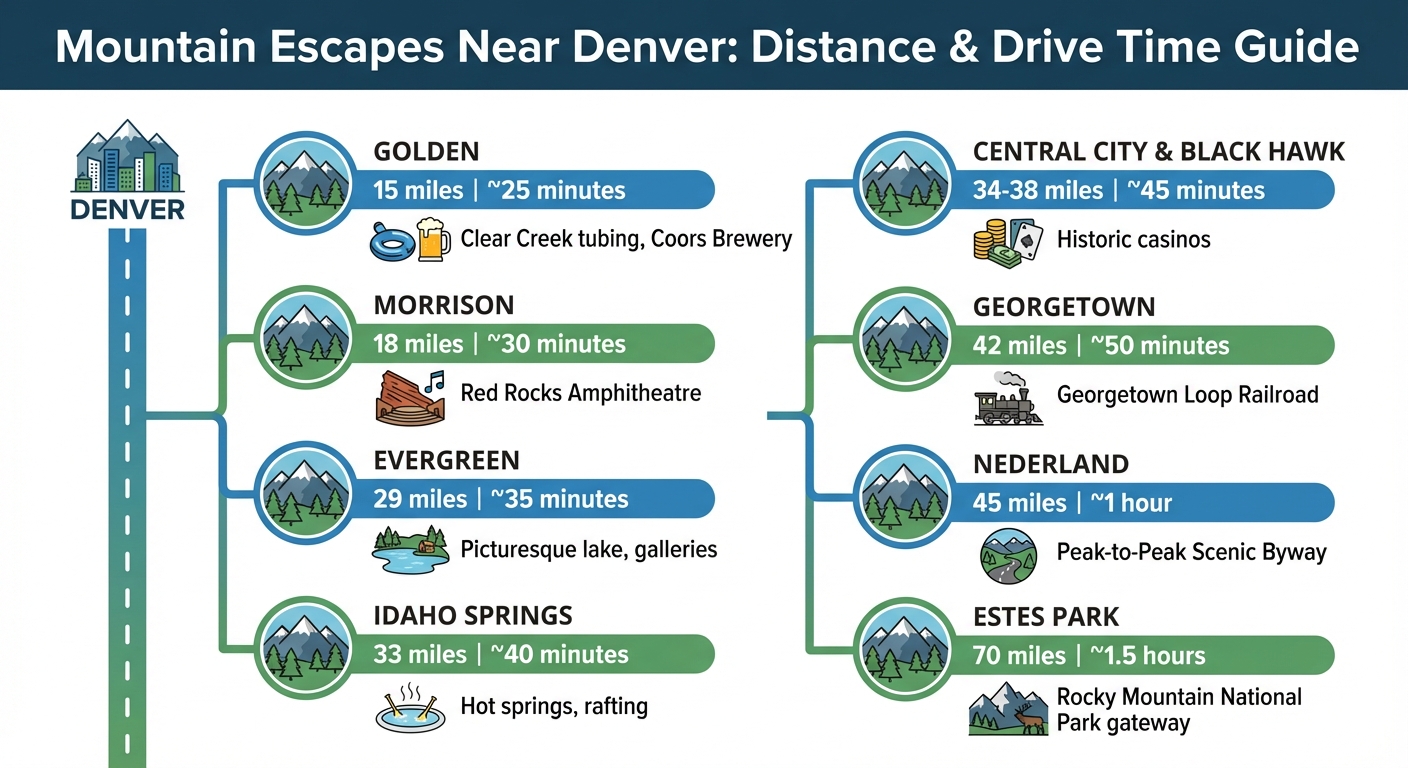
Denver Staycation Guide: Mountain Towns Distance and Travel Times from Denver
Once you've soaked in the vibrant energy of downtown Denver, why not head to the mountains for a change of pace? Colorado's nearby mountain towns and trails offer the perfect complement to your city getaway, combining outdoor adventures with scenic charm.
Top Mountain Towns to Visit
You don’t have to venture far from Denver to find some incredible mountain towns. Within a 25-minute to 1.5-hour drive, you’ll discover destinations packed with character and activities.
- Golden (15 miles, ~25 minutes): This town is a quick escape with Clear Creek for tubing, trails like North Table Mountain, and even the famous Coors Brewery.
- Morrison (18 miles): Home to the iconic Red Rocks Park and Amphitheatre, a natural marvel carved from 300-foot sandstone walls.
- Evergreen (29 miles, ~35 minutes): Boasts a picturesque lake for boating or ice skating, along with charming galleries and boutiques.
- Idaho Springs (33 miles, ~40 minutes): Known for its mining history, Indian Hot Springs, and Argo Gold Mine tours.
- Central City & Black Hawk (34–38 miles): These neighboring towns, once gold rush hubs, now feature 24-hour casinos housed in Victorian-era buildings.
- Georgetown (42 miles, ~50 minutes): Famous for its preserved Victorian architecture and the Georgetown Loop Railroad.
- Nederland (45 miles, ~1 hour): A quirky town with its "Frozen Dead Guy" lore and access to the Peak-to-Peak Scenic Byway.
- Estes Park (70 miles, ~1.5 hours): The gateway to Rocky Mountain National Park, offering 415 square miles of wilderness, 359 miles of trails, the historic Stanley Hotel, and frequent elk sightings.
Outdoor Activities and Hiking Trails
The mountains near Denver are a playground for outdoor enthusiasts. Rocky Mountain National Park alone offers a wide range of hiking trails, from the easy 0.5-mile Sprague Lake loop to the challenging 11.2-mile Sky Pond trek. The park is also home to Trail Ridge Road, the highest continuous paved road in the U.S., climbing above 12,000 feet. Note that timed entry reservations ($25 per vehicle) are required from late May to mid-October.
For wildlife lovers, Brainard Lake is a hotspot for spotting moose, while Mount Blue Sky (formerly Mt. Evans) is known for its mountain goats and bighorn sheep. The Mount Blue Sky Scenic Byway, which climbs to a 14,260-foot summit, is set to reopen in 2026 after improvements. Idaho Springs also offers a thrill with white-water rafting on Clear Creek's Class III–V rapids.
Keep altitude safety in mind. High elevations mean thinner air - 43% less oxygen at 14,000 feet compared to sea level. Allow 2–3 days to adjust before tackling high-altitude hikes. And during summer, remember the "Noon Rule" to avoid dangerous afternoon lightning storms. Over the last 36 years, 472 people in Colorado have been injured by lightning strikes.
Best Times to Visit the Mountains
Each season brings its own charm to Colorado’s mountain escapes.
- Summer (June–August): Ideal for hiking and wildflower blooms, though trails can get busy. Arrive early - by 6:00 or 7:00 AM - to beat the crowds. High-alpine roads like Trail Ridge Road and Mount Blue Sky are fully open during this time.
- Fall (September–October): Enjoy golden aspen foliage in spots like Georgetown and Nederland, plus the dramatic elk rut in Estes Park.
- Winter (November–March): A haven for skiers, with Winter Park receiving 350 inches of annual snowfall. For a unique experience, hop on the Winter Park Express "Ski Train" from Denver Union Station.
"Winter is our quietest time of year. What's attracting people is that you get a little bit of the mountains without going all the way to the mountains, which is a huge relief when the I-70 map is red."
– Chris Lursen, General Manager, The Eddy Taproom & Hotel
- Spring (April–May): The foothills around Golden and Boulder come alive with greenery and wildflowers, though many high-altitude roads remain closed until late May. For winter hiking, consider using traction cleats or snowshoes to navigate icy trails like Sprague Lake.
Planning Your Denver Staycation
When to Go and How to Budget
Timing can make or break your Denver staycation. Late September to early October is a standout period, with the aspen trees showing off their golden hues, clear skies, and events like the Denver Food + Wine Festival and Oktoberfest. If you’re into skiing and patio weather, March and April are a rare treat - you can hit the slopes at A-Basin in the morning and enjoy 70°F afternoons downtown. June is another sweet spot, offering blooming wildflowers, clear hiking trails, and the start of Red Rocks concert season, all before the summer heat and crowds of July and August roll in.
"If you ask ten Denver locals their favorite season, at least seven will say fall. The other three are lying." – denversbest
For budget-conscious travelers, the shoulder seasons of April–May and October–November are ideal. During these months, hotel rates can drop by as much as 40% to 60%, and the trails are far less crowded. Save on attractions with a Mile High Culture Pass or Denver CityPASS, which offer discounts for museums and gardens. Looking for affordable eats? Denver's food halls - like Avanti, Denver Central Market, and Zeppelin Station - serve up diverse, wallet-friendly meals compared to traditional restaurants. Don’t forget the city’s free activities, including First Friday art walks, exploring RiNo’s vibrant murals, hiking Red Rocks Park trails (on non-concert days), and relaxing at City Park.
Getting Around Denver and to the Mountains
Once you’ve picked your dates and set your budget, it’s time to plan how you’ll get around. The RTD A Line train is a convenient way to travel from Denver International Airport to Union Station. For just $10, it takes 37 minutes and spares you the hassle of I-70 traffic. Once downtown, skip the car - the MallRide offers free electric bus service along the 16th Street Pedestrian Promenade, and the city’s layout makes it easy to explore on foot. Denver’s RTD light rail system spans 113 miles with 10 lines and over 75 stations. Local fares are $2.75 for a three-hour pass or $5.50 for all-day access.
Heading to the mountains? You’ve got plenty of options beyond driving. The Pegasus shuttle runs hourly from Union Station to mountain towns like Idaho Springs, Frisco, Vail, and Avon. For daily service along I-70, check out Bustang. Winter sports enthusiasts can take the Winter Park Express train, which operates mid-December through late March on select days, offering a direct 2.5-hour ride to Winter Park Resort. If you prefer to rent a car, avoid the I-70 corridor on Saturday mornings (westbound) and Sunday afternoons (eastbound) to sidestep heavy traffic.
With your transportation sorted, you’re ready to pack for both city and mountain adventures.
What to Pack for City and Mountain Activities
Denver’s weather can be unpredictable, so packing layers is a must. Even with 300 days of sunshine a year, you’ll want to be ready for anything from sunny 70°F days to surprise snowstorms. For city outings, don’t forget comfortable walking shoes, sunscreen (the high altitude magnifies UV exposure), and a reusable water bottle to stay hydrated. Lightweight layers that you can easily add or remove will keep you comfortable.
If mountain activities are on your agenda, pack sunglasses, a hat, moisture-wicking clothing for summer hikes, and warm layers with waterproof outerwear for winter. Traction cleats or snowshoes are essential for icy trails, and a small daypack is perfect for carrying snacks, water, and extra layers. With the right gear, you’ll be ready to enjoy everything Denver and the surrounding mountains have to offer.
Conclusion
Denver offers a perfect mix of city sophistication and outdoor adventure. In one moment, you can be savoring upscale dining or catching a game in the city, and in the next, you’re hiking at Red Rocks or paddleboarding at Evergreen Lake - both just 20 to 50 minutes away. Even within the city, Denver’s green spaces and trails provide plenty of opportunities to explore. This seamless blend of urban energy and natural beauty creates the ideal backdrop for an unforgettable staycation.
"Denver is the ultimate locals' playground, staycation spot." – Nate Ferguson
To make the most of your Denver staycation, careful planning is key. Start by choosing a neighborhood that suits your vibe - RiNo for its street art and nightlife, LoDo for its walkability and easy transit options, or Cherry Creek if upscale shopping is your thing. Visiting during the shoulder seasons helps you avoid crowds and snag better rates. For getting around, rely on local transit for downtown exploration, and rent a car only when you’re heading out for mountain adventures.
Denver’s charm lies in the variety of experiences it offers. You could relax in a beer spa or stay in an eco-friendly lodge, then hit the slopes at Echo Mountain before catching a Red Rocks concert that same evening. The city’s ability to combine these unique experiences makes every staycation feel special.
With its sunny weather, diverse lodging options starting at around $199 per night, and unmatched proximity to both cultural hot spots and alpine wilderness, Denver delivers an experience that’s tough to match. Whether you’re a local or just passing through, this city’s blend of urban excitement and outdoor escapes is bound to leave you planning your next staycation before this one even ends.
FAQs
Which downtown Denver area is best for my vibe?
LoDo is the go-to spot if you're looking for a lively and trendy atmosphere. This area is famous for its mix of historic charm and modern energy, offering a vibrant scene filled with dining, shopping, and cultural attractions. It's where historic preservation meets the buzz of contemporary urban life.
When it comes to places to stay, you’ve got some great options. The Rally Hotel, located near Coors Field, is perfect for baseball fans and those who want to stay in the heart of the action. If boutique hotels are more your style, check out Urban Cowboy or The Crawford Hotel, both offering unique and stylish accommodations.
LoDo truly embodies Denver's urban culture, blending its rich history with a fresh, modern vibe.
Do I need a car for mountain day trips from Denver?
You don’t always need a car to enjoy mountain day trips from Denver. Public transit, like the Bustang bus, provides a convenient connection to mountain towns such as Idaho Springs, Frisco, and Vail. Once you're there, many of these towns offer local transportation options, making it simple to get around without having to drive.
How do I avoid altitude sickness on nearby hikes?
Heading to Colorado for some breathtaking hikes? Before you hit those high-altitude trails, it’s smart to prepare your body for the change.
Start by spending a few days in Denver to acclimate to the elevation - Denver sits at about 5,280 feet above sea level, making it a great starting point. Once you're ready to hike, ease into it by choosing trails around 6,000–7,000 feet before attempting higher elevations. Gradually increasing your altitude gives your body time to adjust.
Hydration is key, so drink plenty of water throughout your trip. Eating potassium-rich foods like bananas and avocados can also help your body handle the altitude better. Since weather can shift quickly in the mountains, dress in layers to stay comfortable. And remember to pace yourself - overexertion can worsen altitude sickness. Lastly, steer clear of alcohol, as it can dehydrate you and make symptoms worse.
If you’re unsure about how your body might react or have specific health concerns, it’s always a good idea to consult a healthcare professional before your trip.